Streamed Out: Is the Algorithm Quietly Flattening Britain's Musical Diversity?
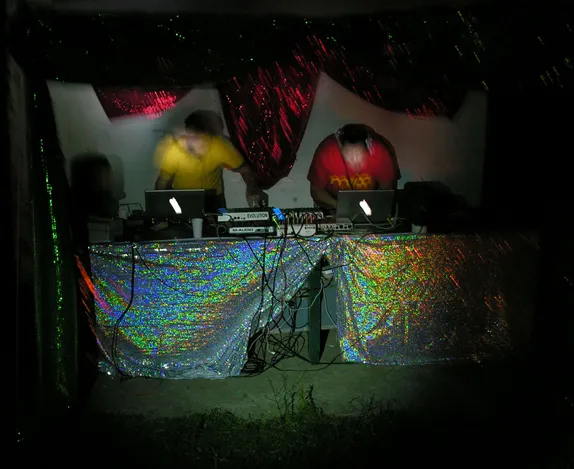
Photo: No machine-readable author provided. Coyita assumed (based on copyright claims)., Public domain, via Wikimedia Commons
Streamed Out: Is the Algorithm Quietly Flattening Britain's Musical Diversity?
Picture the scene. You're an independent British artist. You've spent six months making a record you're genuinely proud of — something weird and specific and yours. You release it, you share it, you wait. The streams trickle in. Then a friend sends you a link to an article explaining that tracks under three minutes get significantly more playlist adds, that songs with a strong hook in the first fifteen seconds perform measurably better, and that a certain tempo range is currently favoured by the algorithm on the platform that accounts for seventy per cent of your income.
What do you do next time you sit down to write?
That's not a hypothetical. It's a conversation happening in rehearsal rooms, home studios, and WhatsApp groups across Britain right now. And the answer — what artists actually do with that information — might be quietly reshaping the sound of British music in ways we haven't fully reckoned with yet.
The Promise and the Problem
It's worth being fair to streaming platforms, because the story isn't simply one of evil corporations crushing artistic freedom. Spotify, Apple Music, Tidal, and their competitors genuinely did democratise access in meaningful ways. An independent artist from Stoke or Swansea can now get their music onto the same platform as a major label act without needing a distributor with industry connections. The barrier to entry collapsed, and that was genuinely good.
But barriers to entry and barriers to discovery are different things. Getting your music onto a streaming platform is now trivially easy. Getting it heard is as difficult as it's ever been, arguably more so, because the sheer volume of content uploaded daily is staggering. And the mechanism that determines what gets heard — the recommendation algorithm — is not a neutral arbiter. It has preferences, and those preferences have consequences.
Algorithms reward engagement. They measure skips, completion rates, saves, playlist adds. They learn what keeps people listening and they surface more of it. This sounds reasonable until you consider what it means for music that requires patience — that takes three listens to reveal itself, that starts quietly before it opens up, that doesn't deliver its emotional payload in the first thirty seconds. That music gets skipped. The algorithm learns. It stops recommending it.
What Artists Are Actually Experiencing
Speak to independent British musicians about this and you get a range of responses, from pragmatic acceptance to barely concealed fury. A folk artist based in the Welsh borders described spending a year making a record of long, atmospheric pieces influenced by the British landscape — tracks that ran to seven or eight minutes, that built slowly, that rewarded a certain kind of attention. The streams were dismal. A subsequent EP of shorter, more immediate songs performed dramatically better. She's now trying to work out how to reconcile the music she wants to make with the formats that actually reach people.
 Photo: Welsh borders, via delveintoeurope.com
A producer working in the space between UK jazz and electronic music described a subtler pressure — not changing the music itself, but changing how it was presented. Releasing tracks as singles rather than albums, chopping longer compositions into shorter segments, structuring releases around what the algorithm favours rather than what makes artistic sense. "It's not that I'm making different music," he said. "It's more like I'm making the same music and then translating it into a language the platform understands. But I'm not sure how long that's sustainable before the translation starts affecting the original."
The Homogenisation Question
Here's the uncomfortable possibility that sits at the centre of this debate. If every independent British artist is receiving the same algorithmic signals — the same data about what performs well, the same incentives to optimise for the same metrics — then the natural diversity of British musical output might slowly converge toward a narrower range of sounds and formats. Not because anyone decided that should happen. Just because thousands of individual rational decisions, each one reasonable in isolation, add up to something troubling in aggregate.
Britain's musical diversity has always been one of its great strengths. The country that gave the world skiffle and punk and drum and bass and grime and folk revival and Britpop and UK garage — this is a culture with an extraordinary capacity to generate genuinely distinct sounds from distinct communities and experiences. That diversity didn't emerge from optimisation. It emerged from chaos, from necessity, from artists making exactly the music they needed to make regardless of commercial logic.
The streaming era doesn't eliminate that impulse. But it does create a powerful counter-pressure, and the question of which force wins out over the next decade is genuinely open.
Resistance and Alternatives
Not everyone is playing the algorithm's game, and it's worth noting the artists who are actively pushing back. Some are doubling down on the live circuit as their primary income stream and treating streaming as a secondary platform rather than the main event — which is, incidentally, one of the reasons grassroots venues matter so much, and why their survival is about more than nostalgia.
Others are building direct relationships with audiences through newsletters, Bandcamp, Patreon, and even old-fashioned physical releases — formats where the algorithm has no jurisdiction. The artist who sells a hundred vinyl copies of a challenging, uncommercial record directly to people who sought it out is, in some meaningful sense, more artistically free than the artist with ten thousand streams generated by algorithmic recommendation.
There's also a growing conversation within the industry about whether streaming platforms could be designed differently — whether metrics that reward patience and depth could sit alongside the current engagement-focused model. It's an early conversation, and the platforms have limited incentive to change a model that works commercially. But it's happening.
The Longer View
British music has survived and adapted to seismic commercial shifts before. The arrival of recorded music, the dominance of radio, the transition from vinyl to cassette to CD — each shift was accompanied by predictions of creative collapse that didn't quite materialise, because artists found ways to work within new constraints while continuing to make things that mattered.
The streaming era will probably be the same. The artists who find ways to navigate the algorithm without being entirely defined by it, who use the platform's reach while maintaining their own creative integrity, who build communities of listeners rather than just passive streamers — those artists will probably be fine.
But the pressure is real, it's worth naming, and the artists feeling it deserve to be heard. The algorithm doesn't have a vote on what British music sounds like. The people making it do. Let's hope they remember that.