Two Heads, One Heart: The Secret Chemistry Behind Britain's Greatest Musical Partnerships
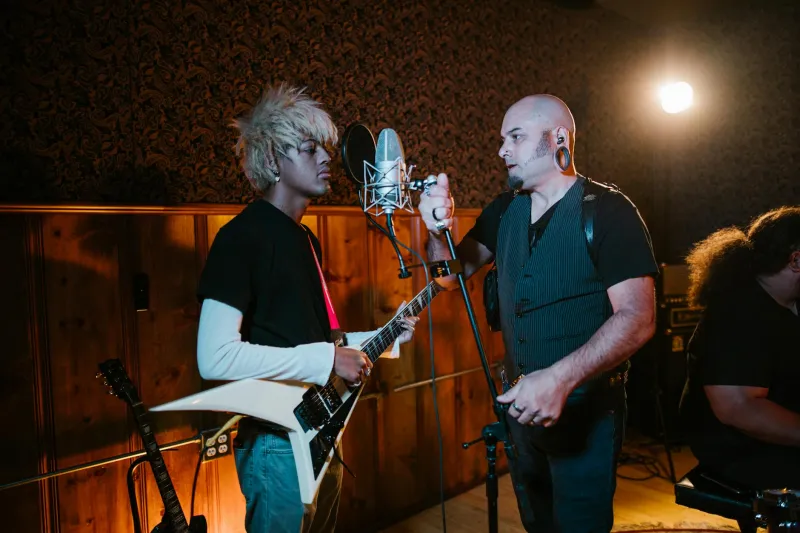
Two Heads, One Heart: The Secret Chemistry Behind Britain's Greatest Musical Partnerships
Musical collaboration is like falling in love – you can't force it, you can't fake it, and when it works, it creates something that transcends the sum of its parts. Britain's musical landscape is littered with partnerships that should never have worked on paper but produced some of our most beloved songs. The question isn't why some collaborations fail, but how any of them succeed at all.
The Alchemy of Opposites
The most compelling British musical partnerships often emerge from creative tension rather than natural harmony. Take the relationship between Damon Albarn and Graham Coxon in Blur – two musicians with fundamentally different approaches to their craft. Albarn's pop sensibilities and Coxon's art-school experimentalism created a productive friction that drove the band's evolution from Madchester wannabes to Britpop legends to experimental pioneers.
 Photo: Damon Albarn, via i.pinimg.com
This dynamic works because creative conflict, when managed properly, prevents artistic stagnation. Each collaborator becomes a check on the other's worst impulses whilst amplifying their strengths. The result is music that neither could have created alone – not because they lacked individual talent, but because the collaborative process itself generates new possibilities.
The Communication Dance
Successful musical partnerships develop their own language – a shorthand that allows complex ideas to be communicated quickly and efficiently. Watch any established duo work together and you'll see this in action: a raised eyebrow that means "take it from the bridge," a particular chord progression that signals a change in emotional direction, a shared vocabulary of references and influences that outsiders might find incomprehensible.
This communication style extends beyond the purely musical. The best collaborators learn to read each other's moods, energy levels, and creative cycles. They know when to push and when to step back, when to offer suggestions and when to simply listen. It's an emotional intelligence that's as crucial as musical ability.
Ego and the Art of Compromise
Perhaps the biggest obstacle to successful collaboration is ego management. Every musician has ideas they're passionate about, and learning to let go of some of those ideas for the greater good of the song is a skill that takes years to develop. The most successful British partnerships have found ways to create space for both egos whilst serving the music.
Oasis provides a fascinating case study in this dynamic. The Gallagher brothers' relationship was famously volatile, but their musical partnership was undeniably effective. Noel's songwriting genius needed Liam's attitude and presence to reach its full potential, whilst Liam's natural charisma required Noel's songs to have something substantial to sell. The tension between them wasn't a bug – it was a feature.
 Photo of Noel Gallagher, via TMDB
Cross-Genre Pollination
Some of Britain's most exciting musical moments have emerged from collaborations between artists from completely different genres. When grime meets indie rock, when folk traditions collide with electronic production, the results can be genuinely groundbreaking. These partnerships work because each artist brings a completely different set of tools and perspectives to the creative process.
The key to successful cross-genre collaboration is mutual respect and genuine curiosity about each other's methods. The best partnerships involve artists who are willing to step outside their comfort zones and learn new approaches to their craft. It's not about one artist featuring on another's track – it's about creating something entirely new that incorporates elements from both worlds.
The Studio as Sacred Space
The physical environment plays a crucial role in collaborative success. Many of Britain's most productive partnerships have been forged in specific studios or rehearsal spaces that become almost sacred to the creative process. These spaces develop their own atmosphere and history, accumulating the psychic residue of countless creative sessions.
The choice of where to collaborate can make or break a partnership. Some duos need the formal structure of a professional studio, whilst others work better in more casual environments. The key is finding a space where both artists feel comfortable being vulnerable and experimental.
Technology and Modern Collaboration
Digital technology has revolutionised collaborative possibilities whilst also creating new challenges. File sharing and remote recording capabilities mean artists can collaborate across continents, but they've also made the personal connection that drives great partnerships more difficult to establish.
The most successful modern collaborations blend technological convenience with old-fashioned face-to-face creative sessions. They use technology to extend and enhance their partnership rather than replace the fundamental human connection that makes collaboration magical.
The Long Game
The best musical partnerships think in terms of decades rather than individual songs or albums. They understand that creative relationships, like romantic ones, go through phases. There will be periods of intense productivity and periods of distance. The key is maintaining the fundamental respect and affection that makes collaboration worthwhile even when the creative chemistry isn't flowing.
This long-term perspective allows partnerships to evolve and grow. The music that two artists make together after ten years will inevitably be different from what they created in their first sessions together. The best collaborations embrace this evolution rather than trying to recapture past magic.
Beyond the Music
Ultimately, the most enduring British musical partnerships transcend pure musical compatibility. They're built on friendship, shared values, and a genuine belief in each other's artistic vision. The music is important, but it's the human connection that sustains the partnership through the inevitable challenges of creative life.
When two artists truly trust each other, they create a safe space for experimentation and vulnerability that's impossible to achieve alone. It's in this space that Britain's most memorable musical moments are born – not from individual genius, but from the mysterious alchemy that occurs when two creative spirits decide to make something beautiful together.