Before the Curtain Rises: The Ritual That Defines Britain's Live Performance Culture
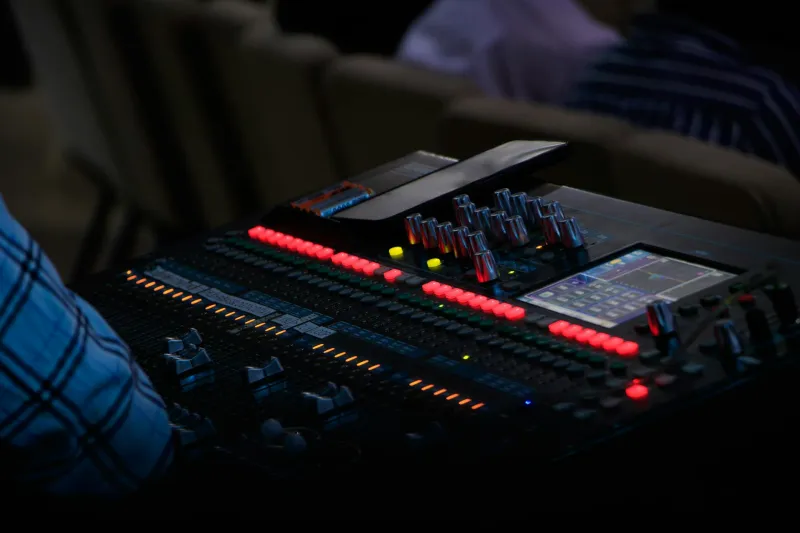
The Sacred Hour
Walk past any British venue an hour before doors open, and you'll witness something remarkable. Through the muffled walls, you'll hear fragments of songs, bursts of laughter, the occasional frustrated shout, and always—always—the phrase "can we try that again?" This is soundcheck time, and it's where the real magic happens.
For most punters, the soundcheck is invisible. They arrive fashionably late, pint in hand, ready for the show to begin. But for those of us who've spent years around Britain's live circuit, we know the truth: the gig is won or lost in that hour before anyone pays to get in.
More Than Just Volume Levels
Sarah Mitchell has been running sound at Manchester's Night & Day Café for the better part of a decade. She's seen everything from Arctic Monkeys' early gigs to unsigned acts playing to three people and a dog. "People think soundcheck is just about making sure the guitars aren't feeding back," she tells me, adjusting her headphones as another band sets up. "But it's actually where you discover whether an artist really understands performance."
 Photo: Night & Day Café, via static.spotapps.co
The ritual is always the same, yet never identical. Drums first—that thunderous crack that makes your chest vibrate. Then bass, finding its place in the room's natural acoustics. Guitars next, each one fighting for its own sonic space. Finally, vocals—the moment when a collection of instruments becomes a band.
But watch closely during this process, and you'll see something deeper at work. The way a drummer adjusts their kit after hearing it through the monitors. How a guitarist subtly shifts their amp positioning. The vocalist who asks for "just a touch more reverb" because they've clocked how the room responds to their voice.
The Psychology of Preparation
Tom Fletcher, who's fronted indie outfit The Meadow Kings across Britain's toilet circuit for five years, describes soundcheck as "controlled vulnerability." He explains: "You're essentially performing your songs badly, on purpose, in front of people who aren't there to see you. It's the strangest thing—you have to be willing to sound awful so you can sound brilliant later."
 Photo: The Meadow Kings, via www.friendsofkingsmeadow.co.uk
This psychological dance is uniquely British in its understated intensity. There's no American-style bravado, no continental theatricality. Instead, there's a quiet professionalism mixed with dry humour that defines our approach to live music. When something goes wrong—and it always does—the response is typically a wry comment and a patient restart.
I've watched seasoned professionals like Elbow's Guy Garvey treat soundcheck with the same meticulous attention they'd give to recording an album. Every monitor level, every guitar tone, every vocal effect is considered and reconsidered. It's craft, pure and simple, and it's what separates the wheat from the chaff in British live music.
The Engineering Artistry
Behind every great soundcheck is an engineer who understands that they're not just balancing frequencies—they're facilitating a conversation between artist and audience that hasn't happened yet. Dave Thompson, who's mixed everyone from Radiohead to unsigned bands at Reading's Purple Turtle, puts it perfectly: "My job isn't to make the band sound like their record. It's to make them sound like themselves, but better."
This philosophy runs deep in British venue culture. Our rooms are often small, acoustically challenging spaces—former pubs, converted warehouses, basement clubs that were never designed for live music. Making these spaces sing requires a combination of technical skill and intuitive understanding that you can't learn from a manual.
The best soundchecks feel like collaborative workshops. The engineer suggests trying a different mic position. The guitarist experiments with their pedal settings. The drummer asks to hear more of the kick in their monitor. It's a negotiation, and when it works, you can feel the anticipation building even in an empty room.
When Things Go Wrong
Of course, not every soundcheck runs smoothly. Equipment fails, personalities clash, and sometimes the acoustics just refuse to cooperate. But here's where British resilience really shines. I've seen bands adapt their entire setlist because the room couldn't handle their usual dynamics. I've watched engineers work miracles with failing equipment held together by gaffer tape and determination.
The legendary Camden Underworld, with its concrete bunker acoustics, has broken many a band's confidence during soundcheck. But it's also taught countless artists to be more dynamic, more responsive, more genuinely alive on stage. The room demands authenticity—you can't hide behind production tricks or studio polish.
The Invisible Foundation
What strikes me most about Britain's soundcheck culture is how it reflects our broader approach to performance. There's an honesty to it, a willingness to do the unglamorous work that makes the glamorous moments possible. It's the musical equivalent of a proper warm-up before a football match—essential, methodical, and completely invisible to those who matter most.
Next time you're queuing outside a venue, spare a thought for what's happening on the other side of those doors. In that sacred hour before showtime, artists and engineers are laying the groundwork for whatever magic the evening might hold. They're not just checking sound levels—they're tuning into the soul of live performance itself.
Because in the end, that's what separates a good gig from a great one: not just the songs or the energy, but the invisible foundation of preparation, craft, and quiet professionalism that makes everything else possible. The soundcheck isn't just the hour before the show—it's where the show truly begins.