Signal and Static: The Moment a Performance Becomes Something You Never Forget
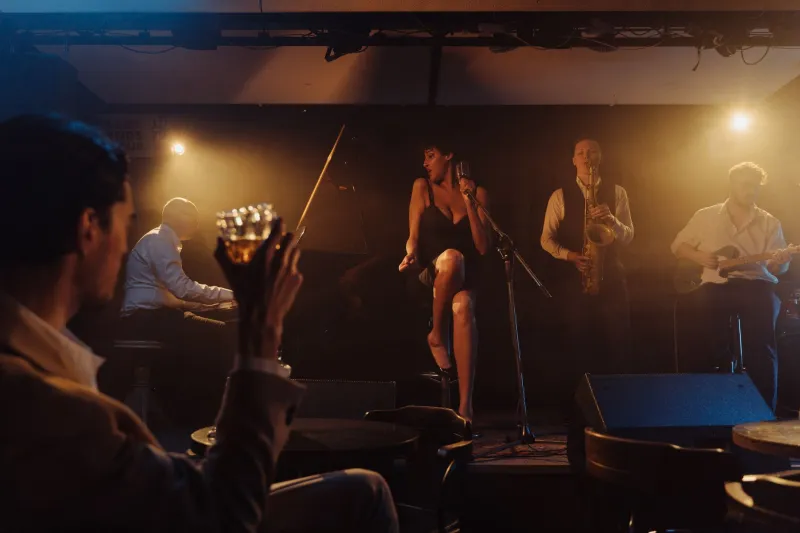
There's a particular kind of silence that happens right before everything clicks. Not the awkward pause between songs, not the fumble with a capo or a tuning peg — something else entirely. A held breath. A room leaning in without realising it. And then it happens: the moment a performance stops being a performance and becomes something bigger.
If you've ever been in the crowd for one of those nights, you already know what we're talking about. If you've been the one on stage when it happens, you'll likely spend years trying to work out exactly how you got there.
The Difference Between Playing and Connecting
Every musician who's spent time on a stage knows the difference between a technically solid set and one that genuinely lands. You can nail every note, remember every lyric, hit every cue — and still walk off feeling like nothing quite caught fire. Conversely, you can fluff an intro, lose your place in a bridge, and somehow end up delivering the most electric forty minutes of your career.
The technical stuff matters, obviously. Nobody's arguing otherwise. But the performances that burrow into people's memories — the ones that get mentioned years later in pub conversations — almost always have something extra going on underneath the craft. A kind of transmission between the person on stage and the people watching that feels less like entertainment and more like shared experience.
British audiences are particularly good at sniffing out the difference. We're a sceptical lot by nature. We don't give standing ovations lightly. But when something real is happening up there, you can feel the room shift its weight. Arms uncross. Phones go down. People stop talking to their mates and just... listen.
What the Best Performers Understand About Vulnerability
Here's the thing that took a lot of artists years to figure out: the moments that hit hardest almost always involve some degree of risk. Not recklessness — risk. The willingness to mean it, even when meaning it might not land.
Playing it safe is the enemy of memorable. A polished, professional, thoroughly rehearsed set can be deeply satisfying to watch, but it rarely moves people in the way that matters. The performances that linger are the ones where you can sense the artist has put something genuinely personal on the table. Where the song isn't just well-executed but actually felt.
This is why artists who've been through something — a rough patch, a creative crisis, a long stretch away from the stage — often come back and deliver their most powerful work. There's a rawness that can't be manufactured. Audiences pick up on it immediately, even if they couldn't articulate exactly why the room suddenly feels different.
Reading the Room, Then Forgetting You're Reading It
The paradox at the heart of great live performance is that the best performers are simultaneously hyper-aware of their audience and completely lost in the music. Too much self-consciousness kills spontaneity. Too little awareness and you're just playing to yourself.
The artists who consistently deliver those unforgettable nights have usually developed an instinct for reading the room — picking up on energy, adjusting pacing, knowing when to push and when to pull back — that operates almost below conscious thought. It becomes second nature after enough stage time, though it never stops being a delicate balance.
There's a reason why seasoned musicians talk about gigs where they felt "in the zone" as almost meditative experiences. The mental chatter quiets down. Decision-making becomes intuitive. And paradoxically, that's often when the most deliberately crafted moments happen — not from overthinking, but from a kind of musical instinct that only emerges when you stop trying to control everything.
The Crowd's Role in the Alchemy
It's worth being honest about something that doesn't get discussed enough: the audience isn't passive in any of this. The crowd shapes a performance as much as the performer does, even if they're not holding an instrument.
A room full of people who are genuinely present — not distracted, not performatively disengaged, but actually there — creates a feedback loop that changes what happens on stage. Artists feel it. The energy comes back across the footlights and influences every choice, every nuance, every split-second decision about whether to extend a note or drop into a quieter dynamic.
Some of the most electric nights in small British venues happen precisely because of this intimacy. A packed room above a pub in Leeds, a converted warehouse in Bristol, a village hall that somehow becomes the centre of the universe for an hour — the closeness means the feedback loop is tighter, more immediate, more powerful.
When It Goes Wrong and Right Simultaneously
Another truth that experienced performers will tell you: some of the most memorable moments come from things going sideways. A string breaks mid-song and the artist keeps going, turns it into something. The sound cuts out and someone starts an acoustic version that the whole room ends up singing. The set list gets abandoned halfway through because the energy in the room demands something different.
These unplanned pivots — when they work — become the stories people tell. They're proof that the person on stage is genuinely present, genuinely reacting, genuinely alive to what's happening rather than executing a pre-packaged product.
The willingness to let a performance breathe, to let it be what it needs to be on that particular night rather than what was planned on Tuesday in the rehearsal room — that's one of the things that separates good from great.
Chasing the Feeling Without Chasing It
The frustrating, beautiful truth about those transcendent performance moments is that you can't manufacture them on demand. You can create the conditions. You can show up prepared, emotionally open, technically sharp. You can choose the right setlist, work the room properly, leave space for the unexpected.
But the alchemy itself? That's not entirely in your hands. And maybe that's the point. Maybe the fact that it can't be guaranteed is exactly what makes it worth chasing.
Every gig is another chance. Another room, another crowd, another opportunity for something to shift in the air and become something neither you nor the audience will easily forget. That uncertainty isn't a flaw in live performance — it's the whole reason it still matters.