Miles, Meal Deals, and Dodgy Monitors: The Unvarnished Truth of British Touring Life
There's a version of touring life that exists in music videos and documentary montages — sun-drenched motorways, laughing bandmates, sold-out venues glowing under perfect stage lighting. Then there's the actual version. The one where you're parked outside a Moto services near Stafford at half eleven on a Tuesday, splitting a meal deal three ways because the venue only paid petrol money, and someone's trying to get the van's heating to work by hitting the dashboard in just the right spot.
British touring life, in all its unglamorous honesty, is something the mainstream music conversation rarely gets right. So let's have a proper look at it.
The Van: Equal Parts Home and Prison
Ask almost any working musician in this country what they associate most with touring and the answer is almost always the van. Not the stage. Not the crowd. The van.
It becomes its own ecosystem remarkably quickly. There's a designated spot for everyone's bag, an unspoken agreement about who controls the aux cable on which stretch of motorway, and a pile of cable ties, gaffer tape, and forgotten guitar picks that accumulates in the footwell like sediment. It smells of fast food wrappers and instrument cases. It's deeply, almost offensively unglamorous. And somehow, for many musicians, it becomes one of the things they genuinely miss when the tour ends.
Because confined spaces create a particular kind of honesty. You can't really maintain a persona in a transit van for six hours. Whatever pretensions anyone had walking in get worn down somewhere around the M6 junction 15. What replaces them is something more useful — a working understanding of who people actually are, what makes them difficult, what makes them brilliant, and how to navigate both.
Soundcheck: The Part Nobody Talks About
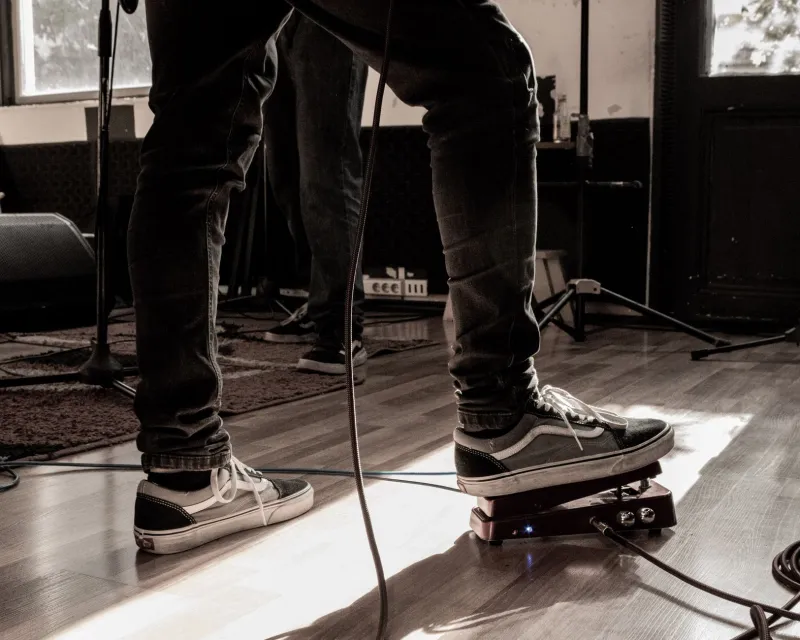
The soundcheck is where touring life gets genuinely technical and frequently maddening. Venues across Britain range from purpose-built, properly equipped rooms with competent house engineers to — and this is said with affection — absolute nightmare boxes where the electrics haven't been looked at since 1987 and the monitor wedge produces a frequency that makes your back teeth ache.
Musicians learn to read a room in the first ten minutes of a soundcheck. Is the stage grounded properly? Where's the hum coming from? Will the PA actually project to the back, or does this place have one of those acoustic dead zones where sound just goes to die? These aren't abstract concerns — they're the difference between a good show and a night of firefighting.
And then there are the negotiations. With house engineers who are tired and slightly territorial. With venue managers who want you set up and out of the bar area before the evening crowd arrives. With your own bandmates about monitor levels and whether the kick drum is sitting right in the mix. All of this before a single paying punter walks through the door.
It requires patience that isn't taught in any music college. It's earned, slowly, through repetition.
The Hours Nobody Photographs
There's a long stretch in every touring day that exists between soundcheck and showtime where absolutely nothing particularly interesting happens. You find somewhere to eat that isn't the venue's rider (which, if you're not headlining, probably consists of a six-pack and some slightly sad crisps). You walk around whatever town you're in, killing time. You sit backstage in a room that might be a converted storage cupboard and try to rest without actually sleeping because sleeping makes you groggy for the show.
These hours are where touring either breaks people or bonds them. The conversations that happen in green rooms and car parks and the back booths of pubs near venues — those are often the ones musicians remember longest. The arguments about music and art and money and whether any of this is sustainable. The moments of genuine laughter that come from shared absurdity. The quiet stretches where nobody says anything and that's completely fine.
There's a particular camaraderie that only comes from shared inconvenience. Touring provides that in abundance.
When Things Go Wrong Onstage
Every touring musician has a story. The PA cutting out mid-song. The broken string at the worst possible moment. The venue that booked you for a capacity of two hundred but got eleven people through the door on a wet Wednesday in February. The support act that ran forty minutes over and now you're starting late to an audience that's already slightly annoyed.
What's interesting is how rarely these stories are told with bitterness. There's a dark comedy to touring disasters that musicians seem to genuinely appreciate in retrospect, even when they were absolutely furious at the time. The show where everything went wrong becomes the story you tell for years. The perfect show, technically speaking, is often the one nobody can quite remember.
This says something important about live performance — that audiences, consciously or not, are often responding to authenticity and human presence more than technical precision. The musician who keeps going when the monitor blows, who makes eye contact with the crowd and grins through the chaos, who finds the show inside the disaster — that's the one people talk about on the drive home.
Why They Keep Doing It
The honest answer to why British musicians keep touring, despite the financial precariousness and the physical grind and the dodgy electrics and the meal deals, is that live performance does something recordings simply cannot replicate.
There's an energy exchange that happens between a performer and a room full of people that's genuinely irreplaceable. You can stream a song a million times and never feel what you feel in the back of a small venue when the room locks into a moment together. Musicians know this. They keep getting in the van because they know it.
Britain's touring circuit — the network of small venues, arts centres, pub stages, and festival tents that stretches from Cornwall to Caithness — is the engine room of this country's musical culture. It's where careers are genuinely built, where audiences are earned one night at a time, where the relationship between performer and crowd gets forged into something real.
The glamour is largely fictional. The value is absolutely not.