Fifteen Seconds to Stage: How TikTok Became Britain's Most Brutal Performing Arts School
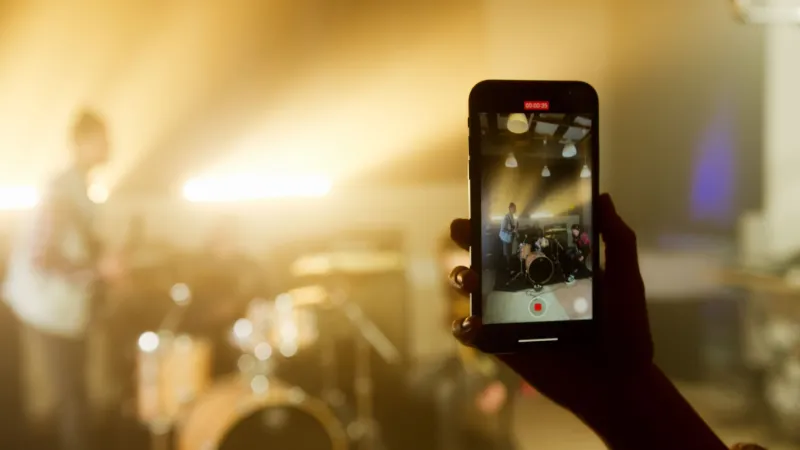
Fifteen Seconds to Stage: The TikTok Generation Rewriting What 'Live' Actually Means
The first time Priya played to a crowd that could actually see her face, she was terrified. Which is remarkable, considering she'd already performed to several million people.
Priya — not her real name, she's cagey about press — is 22, based in Manchester, and has been making music videos for TikTok since she was 17. She has a following that most artists who've been grinding the live circuit for a decade would quietly envy. She can time a musical moment to a video cut with the instinctive precision of someone who's edited thousands of clips. She knows exactly how to hold a camera's attention. And when she finally played her first proper headline show at a 200-capacity venue in the Northern Quarter last year, she had to relearn almost everything from scratch.
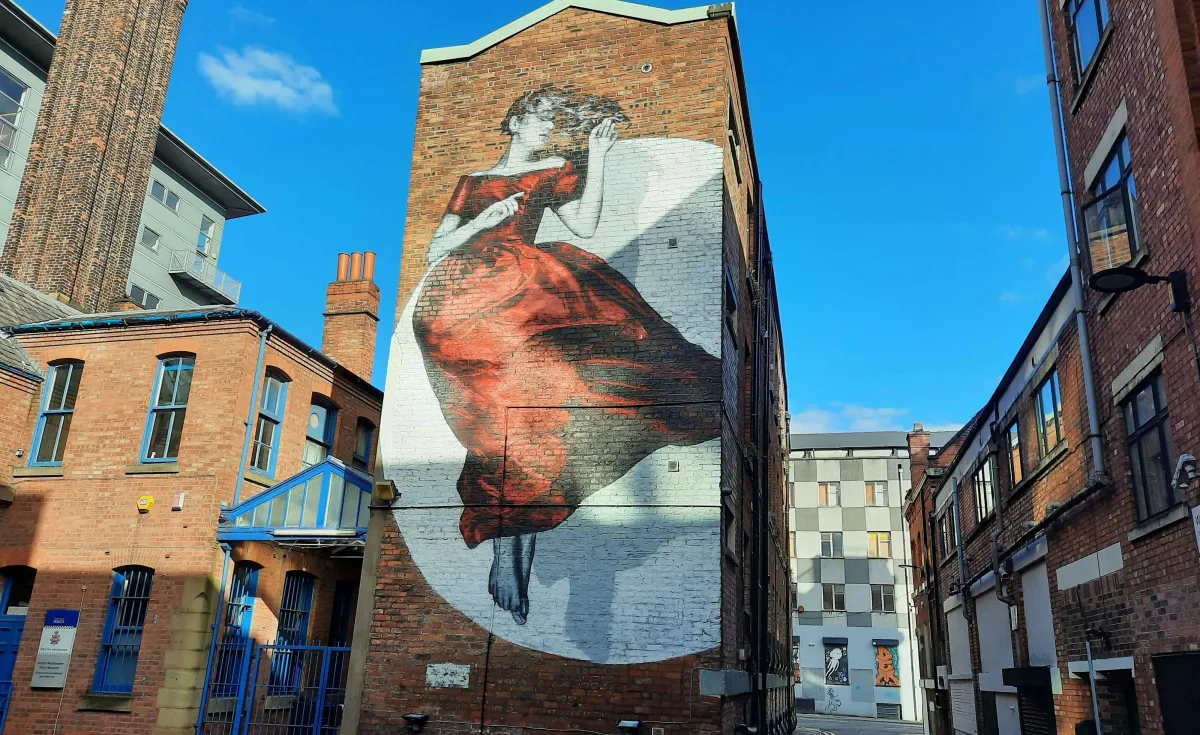 Photo: Northern Quarter, via questo.imgix.net
"The audience doesn't have a scroll button," she told me. "That's the thing nobody tells you. Online, if you lose someone for two seconds, they're gone. In a room, they're still there. They're waiting. And that's somehow more frightening."
The New Apprenticeship
For decades, the path from bedroom musician to performing artist ran through a fairly predictable set of rites of passage. Open mic nights. Terrible support slots. Pub gigs where the sound system was held together with gaffer tape and optimism. Slowly, painfully, you learned to read a room, hold a crowd, and turn nerves into energy.
That path hasn't disappeared, but it now has a significant digital alternative running alongside it — and an increasing number of young British artists are arriving at the live circuit having already completed a rigorous, if unconventional, performance education entirely on social media.
TikTok in particular has become the dominant training ground. The platform's format — short videos, immediate feedback, algorithmic amplification of what works — creates a performance environment that is, in its own way, extraordinarily demanding. You learn timing because you have to. You learn presentation because the camera is unforgiving. You learn to hook an audience in the first three seconds because the alternative is irrelevance.
These are real skills. They're just not quite the same skills you need when you're standing in front of 300 people in Birmingham on a wet Thursday.
What the Screen Teaches Well
Talk to musicians who've built their audience primarily online and certain competencies come up consistently. Confidence in front of a camera is the obvious one — the self-consciousness that makes many early live performers stiff and awkward simply doesn't survive extended TikTok use. You either get comfortable being watched or you stop posting.
There's also something interesting happening with musical arrangement. The TikTok format has forced a generation of musicians to become genuinely expert at identifying the most compelling moment in a song — the hook, the emotional peak, the bit that makes a stranger stop scrolling — and building outward from there. That's a compositional skill with real value, even if it was developed in an unusual context.
And the feedback loop is, in some ways, more honest than a live audience. A crowd will politely applaud things that aren't working. The algorithm won't. If something doesn't connect, the numbers tell you immediately, brutally, and without any social niceties. Several artists have described this as genuinely useful creative discipline, even when it's demoralising.
What the Screen Can't Teach
But spend any time talking to artists who've made the crossing from viral moments to real-world stages, and the gaps become equally clear.
The physical reality of a live room is something no amount of screen time prepares you for. The sound coming back at you from a PA system. The heat of a crowd. The fact that when you make a mistake, you can't stop, edit, and reshoot — you have to keep going and make the mistake part of the show. These are things you can only learn by doing them, and they're not optional skills for anyone serious about live performance.
There's also a question about the relationship between performer and audience that develops differently in each context. Online, the audience is a number, a comment section, a metric. In a room, they're people, and the exchange between performer and crowd — the thing that makes a great live show genuinely transcendent — is fundamentally human in a way that a screen mediates out of existence.
Some artists find this transition disorienting. Others find it revelatory. Priya describes her first headline show as "the first time I actually felt like a musician rather than a content creator," which says something important about how she'd been experiencing her own work up to that point.
The Hybrid Generation
The most interesting artists coming through right now seem to be the ones treating these as complementary rather than competing skill sets. They're using digital platforms to build audience, develop material, and practise presentation — and then they're doing the live work to develop the things the screen can't give them.
It's not unlike how previous generations used recording and live performance differently, understanding that each context demanded something specific. The medium changes; the fundamental challenge of connecting with an audience doesn't.
What TikTok has genuinely changed is the starting point. A musician stepping onto a stage for the first time in 2024 might arrive with more performance experience — in one sense of the word — than someone who'd been gigging for years in 1994. They've just been performing somewhere different.
The question isn't whether digital performance counts. It clearly does. The question is what happens next — and whether the artists who've built their confidence on a screen are willing to do the harder, messier, more unpredictable work of filling a room with people who came specifically to see them.