The Weight of Returning: Why Coming Back Is the Hardest Performance of All
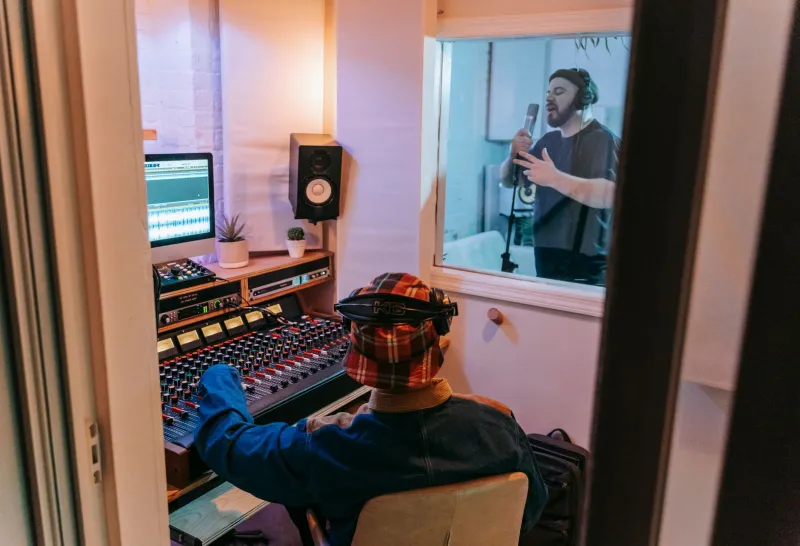
Somewhere in Britain right now, there is an artist sitting on a body of new work — songs written in the quiet, away from the noise, genuinely good songs — who cannot bring themselves to release it. Not because the music isn't ready. Because they aren't sure they are.
The comeback is one of popular music's great dramatic structures. We love the narrative of it — the hiatus, the wilderness years, the triumphant return. We treat it like a story with a clean arc. But spend any time talking honestly with musicians who have stepped back from public life, and the picture that emerges is considerably messier, considerably more human, and considerably more difficult than the redemption narrative allows for.
The Silence That Grows
Hiatuses rarely start as decisions. More often they start as pauses — a tour that ends without the next one being booked, an album cycle that finishes without the immediate pressure to begin another, a period of personal difficulty that quietly extends itself. And then, gradually, the silence becomes its own presence.
"I didn't decide to stop," one British singer-songwriter told me, someone who had released critically well-received records in the early part of the last decade before largely disappearing from public view. "I just... stopped. And then the stopping had gone on long enough that coming back felt like it required a reason. And I didn't have a reason. I just had songs."
That gap between having songs and having a reason is where a lot of artists get stuck. The music industry — and the broader cultural conversation around music — has become so saturated with narrative that simply returning with new material feels insufficient. There has to be a story. A reinvention. A statement of intent. The music itself, it seems, is never quite enough.
The Relevance Trap
The word "relevance" does a lot of damage in British music. It's wielded by label executives, by journalists, by the artists themselves — internalised until it becomes a kind of constant background anxiety. Am I still relevant? Will anyone care? Have I missed my moment?
For artists considering a return after time away, these questions become overwhelming. The landscape they stepped back from has changed. Streaming has restructured how music reaches people. Social media algorithms have created entirely new gatekeeping structures. The artists who are currently prominent may bear little resemblance to those who were prominent when they last put out music.
One musician who had a significant following during the mid-2000s British indie boom described trying to re-enter the landscape around 2019. "I'd been away for about four years. Not doing nothing — writing, living, dealing with some health stuff. And when I started thinking about coming back, everyone I spoke to wanted to know how I was going to 'position' the return. What the angle was. Whether I'd changed enough to justify the conversation. And I just thought — I've written some songs I'm proud of. Isn't that enough?"
It often isn't. Not because audiences are unforgiving — in fact, British audiences tend to be remarkably loyal to artists they've connected with, often more loyal than the industry gives them credit for — but because the infrastructure around the artist has become so fixated on novelty and narrative that a straightforward return feels almost transgressive.
The Mental Arithmetic of Returning
Beyond the industry pressures, there's a deeply personal calculation that artists describe making when they consider a comeback. It's not a simple calculation, and it doesn't always resolve neatly.
On one side: the desire to share work, to reconnect with an audience, to do the thing they love. On the other: the vulnerability of public exposure after a period of privacy, the fear of a lukewarm reception, the very specific anxiety of being compared unfavourably to your own earlier work.
That last one is particularly acute. When your previous output exists in the cultural memory as something people genuinely loved, the new work has to contend not just with other artists' music but with an idealised version of yourself. "You're not just competing with what's out now," one artist said. "You're competing with who people remember you being. And that person doesn't exist anymore. They've been preserved in amber while you've been getting on with actually living."
The psychological weight of this is significant, and it's rarely discussed openly because the music industry has limited tolerance for vulnerability that doesn't serve a promotional purpose. Admitting that you're afraid to come back is not, generally speaking, considered a useful part of a press campaign.
The Ones Who Didn't Make It Back
For every artist who navigates a successful return — and there are genuine examples in British music of comebacks that were artistically and commercially meaningful — there are others who tried and found the experience too costly, or who never quite got over the threshold of trying at all.
Some of those artists have made peace with it. They make music privately, share it in limited ways, or channel their creativity into other forms. Others carry a particular kind of grief — for work that exists but isn't heard, for an artistic identity that feels unfinished.
"I have an album," one musician told me, with a directness that was quietly devastating. "It's done. It's been done for two years. And I can't release it because I can't face what happens if nobody cares. I know that's irrational. But knowing it's irrational doesn't make it easier."
This is the human reality behind the glossy narrative of the comeback. Not a triumphant return from the wilderness, but a sustained negotiation with fear — fear of irrelevance, fear of exposure, fear of discovering that the connection you had with an audience was more fragile than you believed.
What We Ask of Artists
There's something worth examining in what the music industry — and music culture more broadly — demands of artists who step away. We celebrate the hiatus when it produces a reinvention we approve of. We're considerably less forgiving of returns that feel tentative, or uncertain, or simply human.
The expectation of the triumphant comeback places an enormous burden on artists who are, in many cases, returning precisely because they've been through something difficult. The demand that they emerge transformed, relevant, and narratively coherent adds a layer of performance to what might otherwise be a simple act of artistic continuation.
Britain has produced extraordinary music across generations partly because its artists have been willing to take risks, to be vulnerable, to make things that might not work. Preserving that culture means making space for returns that don't need a story — that are just someone, having been quiet for a while, deciding they have something to say again.
The album that never comes out is always the saddest story in music. Not because of what the audience misses, but because of what it costs the person who made it to keep it locked away.
Sometimes the bravest thing isn't the comeback. It's the decision, finally, quietly, to just let the music out.