Priced Out of the Stage: The Property Crisis Quietly Killing Britain's Live Music Heartlands
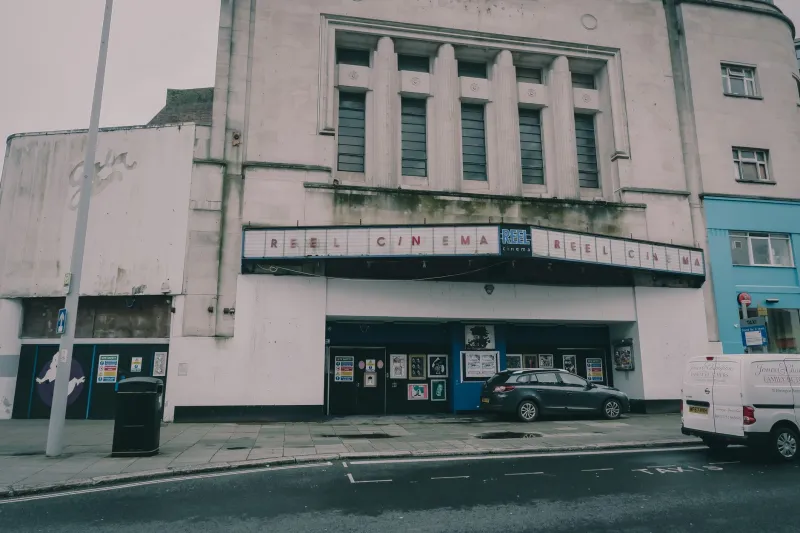
There's a pub in South London that used to put on three or four acts a week. Local bands, the occasional touring outfit passing through on a shoestring, open mic nights that genuinely launched careers. It's a cocktail bar now. Very nice, apparently. The cocktails are excellent. There is no stage.
This story, or some version of it, is playing out across Britain with a regularity that should alarm anyone who cares about where music actually comes from. Not the polished, festival-ready, algorithm-approved version of music — but the rough, formative, necessary kind. The kind that happens in rooms that smell slightly of old beer and ambition.
The Numbers Behind the Noise
The statistics are stark, even if they've become numbingly familiar. Britain lost a significant proportion of its grassroots music venues in the decade between 2010 and 2020, a trend accelerated by the pandemic and showing precious little sign of reversing. The Music Venue Trust, which tracks these closures with the diligence of a concerned parent, has documented the ongoing attrition in detail. But statistics, as ever, struggle to capture what's actually being lost.
What's being lost is geography. Specifically, the geography of who gets to perform and where.
When a venue closes in a particular neighbourhood — especially in a city neighbourhood undergoing rapid property development — it doesn't just disappear. It relocates the cultural centre of gravity. Artists who used to play locally suddenly have to travel further. Audiences who used to walk to gigs now have to factor in transport costs on top of ticket prices that are already climbing. The whole ecosystem shifts, and not everyone can follow it.
The Landlord Problem
Speak to venue operators across the country and a consistent picture emerges. The challenge isn't usually falling audience numbers or declining interest in live music — if anything, appetite for authentic, intimate live experiences has grown since the pandemic. The challenge is the building.
Rents are rising in ways that bear no relationship to what a grassroots music venue can realistically generate. One venue owner in Bristol — running a 200-capacity room that has hosted some genuinely significant British acts over the years — described receiving a lease renewal offer that would have increased their monthly outgoings by nearly sixty percent. "We do good business," she said. "We're not some vanity project. But there's no model where those numbers work unless we start charging £20 a ticket for every show, which defeats the entire point of what we are."
The broader context is the familiar one: city centres and inner suburbs that were once affordable for arts organisations, independent businesses, and creative spaces have become attractive to property developers whose calculations have nothing to do with cultural value. A music venue occupying a prime site is, from a purely financial perspective, an inefficiency waiting to be corrected.
Who Gets Left Behind
The geographic reshaping of Britain's live music landscape has consequences that extend well beyond inconvenience. When venues close in working-class areas and the music scene migrates to more affluent districts — or to purpose-built cultural quarters that carry their own pricing structures — the implicit message is that certain communities are no longer part of the story.
Musicians from those communities feel this acutely. Several artists I've spoken to over the past year described a creeping sense that the ladder they'd expected to climb — local pub gig, small venue, medium venue, larger room — had had its bottom rungs removed. The entry-level infrastructure that allowed previous generations of British artists to develop in public, to fail safely, to build an audience gradually, is contracting.
"There's nowhere to be bad anymore," one young guitarist from Birmingham put it, with a bluntness that stuck. "And you need to be bad for a while. That's how it works. But the places where you could afford to be bad — where the tickets were cheap enough that people would take a chance on you — those are closing."
The Promoter's Squeeze
Independent promoters occupy an equally precarious position in this shifting landscape. Operating on margins that were never comfortable, they're now navigating rising venue hire costs, increased production expenses, and audiences that have become more selective about how they spend their entertainment budget.
One promoter who works primarily across the North of England described the calculation he now makes before committing to any show. "Five years ago I'd take a punt on an interesting act in a mid-sized room and know that even if it didn't sell out, I wasn't going to lose my shirt. Now the numbers are different. The room costs more, the rider costs more, the PA costs more. So I'm booking safer. And that means the artists taking the risks — the ones doing something genuinely new — aren't getting the opportunities they should be."
This risk-aversion at the promoter level compounds the problem for emerging artists. The venues that remain are becoming more conservative in their programming precisely because they can't afford not to be.
Resistance and Reinvention
None of this is entirely without hope. Across Britain, creative responses to the venue crisis are emerging — some scrappy, some surprisingly sophisticated. Community ownership models have saved several venues that would otherwise have closed, with local music lovers buying stakes and collectively underwriting the risk. Meanwhile, unconventional spaces — warehouses, community centres, arts centres with flexible programming — are absorbing some of the demand that traditional venues can no longer meet.
There's also a growing political consciousness around the issue. The Agent of Change principle — which requires new residential developments near existing venues to fund their own soundproofing, rather than placing the burden on the venue — has been a meaningful legislative step, even if its implementation remains patchy.
But legislation and community spirit can only do so much against the structural economics of property speculation. The fundamental tension between land value and cultural value isn't going to be resolved by goodwill alone.
What a Venue Actually Is
Perhaps what gets lost in discussions of capacity numbers and lease rates is the simpler question of what a music venue actually is. It's not just a room. It's a place where a neighbourhood has a creative identity. Where a seventeen-year-old can watch a band and decide they want to do that too. Where a community's musical character gets formed and reformed across years and decades.
When those places close, the neighbourhood doesn't just lose a building. It loses a kind of permission — the cultural permission to be a place where things happen, where artists come from, where music lives.
Britain has always punched above its weight musically, and we tend to treat that as some kind of inevitability. It isn't. It's the product of infrastructure — specifically, the kind of grassroots, affordable, geographically distributed infrastructure that is currently being quietly dismantled.
The cocktail bar in South London makes excellent drinks, I'm sure. But it's not making the next generation of British musicians. And that gap, once it opens wide enough, is very hard to close.