The Folding Table Economy: How Britain's Independent Artists Made Merch Their Most Powerful Tool
The Folding Table Economy: How Britain's Independent Artists Made Merch Their Most Powerful Tool
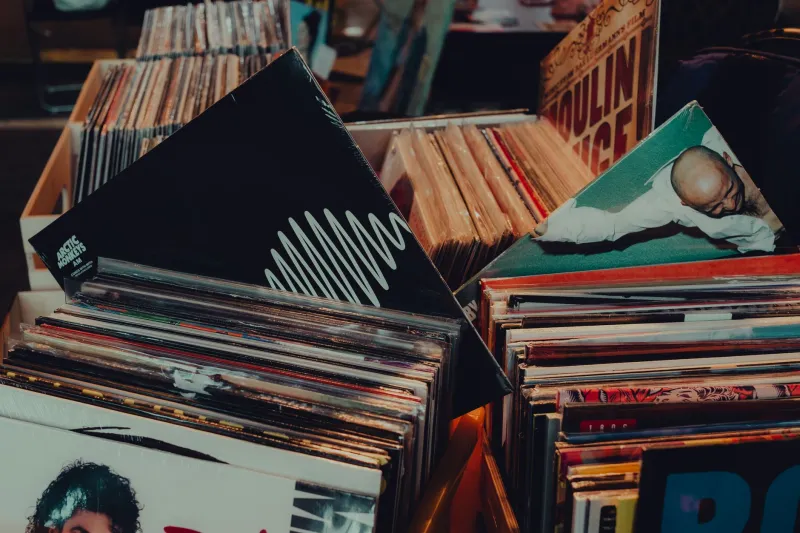
It's usually tucked near the back of the venue, or sometimes just inside the door. A folding table, a cardboard box or two, maybe a clothes rail if someone remembered to bring one. A few T-shirts pinned to the wall with gaffer tape. Some records in a crate. A hand-written price list. Possibly a small card reader that may or may not have signal. This is the merch table, and for a huge number of Britain's independent artists, it is quietly one of the most important pieces of infrastructure in their entire career.
That might sound dramatic. It isn't. When streaming royalties for independent artists can amount to a few quid per thousand plays, when touring costs eat into revenue before it's even banked, when record deals that once provided advances have largely given way to arrangements where the artist carries most of the financial risk — the merch table isn't an afterthought. It's a lifeline. And the artists who've figured out how to work it properly are building something that the music industry's digital revolution hasn't managed to commodify. Not yet, anyway.
From Afterthought to Artery
There was a time when merchandise was largely the territory of stadium acts. The tour T-shirt as a badge of having been there, the programme to flip through on the train home. For smaller artists playing the grassroots circuit, merch was often an optimistic pile of unsold CDs and a few shirts in sizes nobody wanted. The economics didn't really stack up unless you were moving volume.
That changed when streaming arrived and eviscerated the per-unit income from recorded music. Suddenly, the physical thing — the tangible object that a fan could take home — became disproportionately valuable. Not just financially, but symbolically. Buying a record or a T-shirt from an artist you love at a small gig is a different act entirely from clicking a follow button. It's a conscious transaction. It means something.
British independent artists have been quietly building their understanding of this for years now. The merch table has evolved from a box of stuff to a curated experience, in some cases almost a retail extension of the artist's creative identity. Limited edition prints. Hand-numbered vinyl. Tote bags with album art. Zines. Handwritten lyric sheets. The creativity that goes into merch offerings has genuinely exploded, driven by necessity and, in many cases, by artists who are simply applying the same imagination to their merchandise that they apply to their music.
The Psychology of the Post-Gig Moment
Here's the thing about the merch table that no streaming platform can touch: timing. The moment a gig ends — when the lights come up and the last note is still ringing in people's ears — is one of the most emotionally heightened moments in any fan's experience. They've just been part of something. They're buzzing. They feel connected to the artist and to everyone else in the room. And then, there's the table.
The post-gig merch window is brief and powerful. Fans who might scroll past an online shop without a second thought will happily queue for ten minutes to buy a record they could have ordered from home, because buying it here, now, from the artist themselves (or at least in close proximity to them), feels different. The emotional charge of the performance transfers directly into the transaction. This is not manipulation — it's just human. We attach meaning to context.
Artists who understand this use it thoughtfully. Positioning themselves near the merch table after a show — available for a chat, a photo, a signature — transforms the purchase into a moment of genuine connection. It's the opposite of the algorithmic distance of streaming. You're handing money directly to the person whose music just moved you. That matters to people.
Making It Irresistible
The smartest independent artists on the British circuit approach their merch offering the same way they approach their setlist — with intention. What story does this table tell? What feels exclusive? What would someone genuinely want to own rather than just buy?
Limited runs are a powerful tool. A hundred hand-stamped copies of a 7-inch, sold only at shows, creates urgency without requiring a marketing budget. The knowledge that you can't get this anywhere else — not on Bandcamp, not in a shop, only here, only tonight — taps into something real. Scarcity, when it's genuine, works.
Presentation matters too. A table that looks like someone cared about it invites browsing. Decent lighting, a bit of thought about how things are displayed, price points that make sense — none of this costs much, but all of it signals professionalism and pride. And fans notice. They're not just buying a T-shirt; they're buying into the idea that this artist takes what they do seriously.
Price sensitivity is a genuine consideration on the British circuit, where audiences at grassroots shows are often younger and less flush. Artists who offer a range — something at a fiver, something at fifteen, something at thirty — tend to convert more browsers into buyers than those whose table is all-or-nothing. A well-priced badge or sticker might feel trivial, but it gets someone's money into your pocket and your name into their daily life.
The Human Transaction
There's a broader point lurking underneath all of this, one that goes beyond the practicalities of revenue. The merch table is one of the last genuinely human touchpoints between an artist and their audience in an industry that has steadily moved towards the frictionless and the digital.
You can't automate the moment when someone tells you that your song got them through a rough patch and then buys your record with shaking hands. You can't algorithm the conversation that starts at a merch table and ends with a fan who'll evangelize about you to everyone they know. These moments build careers in ways that playlist placements rarely do — slowly, genuinely, person by person.
For Britain's independent artists, the folding table isn't glamorous. It's heavy to carry, awkward to set up, and sometimes you spend the whole evening watching people walk past it. But when it works — when someone picks up a record, catches your eye, and says 'I'll take this' — there's a directness to that exchange that the music industry's digital infrastructure simply can't replicate.
That table is the show after the show. And for a lot of artists, it's the one that actually pays the rent.