Twenty Minutes That Change Everything: The Hidden Power of the Soundcheck
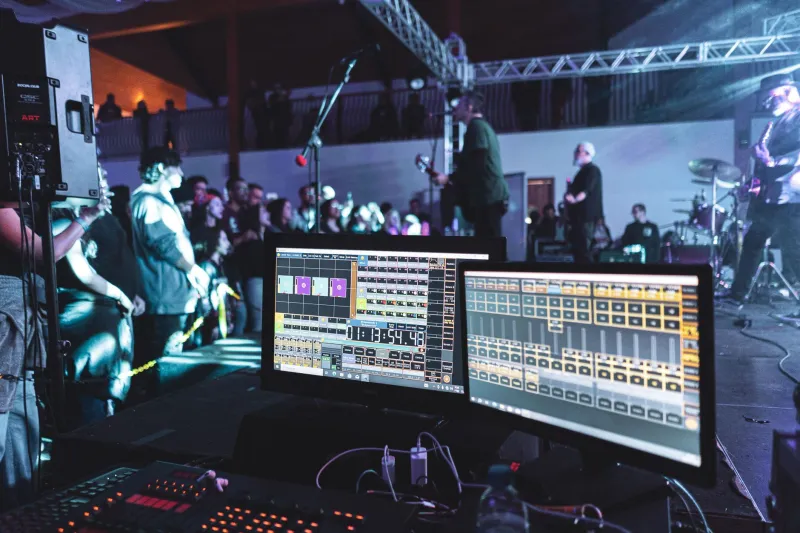
There's a moment, usually around five in the afternoon in a half-lit venue that smells of last night's lager and fresh cable ties, when everything about a gig gets decided. Not on stage during the headline set. Not in the green room over a rider that's three cans short of what was promised. It happens during soundcheck — that scrappy, unglamorous window of time that most performers either treat like a sacred ritual or a mild inconvenience.
The difference between those two camps, it turns out, is enormous.
What's Actually Happening During Soundcheck
On the surface, soundcheck looks like admin. A guitarist plays a chord. Someone in a black T-shirt behind a desk waves their hand. The drummer hits a snare three times. A monitor gets nudged. Repeat until everyone's vaguely satisfied. Job done.
But ask any sound engineer worth their salt and they'll tell you something different is going on entirely.
"Soundcheck is a diagnostic," says one front-of-house engineer who's worked venues from the Barrowlands to the Roundhouse for the better part of fifteen years. "You're testing the room, obviously — finding the frequencies that are going to cause problems, balancing the mix. But you're also reading the band. You can tell within about ninety seconds whether they're going to have a good night."
What he's picking up on isn't technical. It's psychological. The way a vocalist approaches the microphone during soundcheck — tentatively, or like they own the thing — tells a story about how they'll carry themselves when the room fills up. Whether a guitarist pauses to listen back, or just keeps playing regardless of what's coming through the monitors, reveals whether they're genuinely tuned in or just going through motions.
"The artists who treat soundcheck casually," he adds, "are usually the ones who come off stage frustrated. And the frustration is almost never about the sound."
The Psychological Battlefield
There's a concept in sports psychology called mental rehearsal — the idea that running through a performance in your head, in detail, primes the brain for the real thing. Soundcheck is the live equivalent, and the most clued-up British performers have figured this out.
A vocalist who's toured extensively across the UK circuit describes it like this: "I used to treat soundcheck as the thing I had to get through before the actual gig. Now I treat it as the first performance. Same energy, same intention. I'm not going through the motions — I'm setting the tone for the whole evening."
That shift in mindset, she says, came after a particularly rough gig in Manchester where a rushed soundcheck had left her feeling off-balance all night. The monitors weren't right, she'd never settled into the room, and by the time the set ended she felt like she'd been fighting the venue rather than playing it.
"After that I started arriving earlier, asking more questions, actually communicating with the engineer rather than just nodding and walking off. The difference was night and day."
Venue managers notice this too. One who runs a mid-sized room in Bristol has seen enough acts come through to spot the pattern almost immediately. "The bands that use soundcheck well — they're talking to each other, they're adjusting, they're laughing a bit. The ones who spiral are usually the ones who go quiet. They hear something they don't like and it just... sits on them."
The Technical Side Nobody Talks About
Beyond the psychological dimension, there's a practical argument for taking soundcheck seriously that gets overlooked precisely because it feels too obvious: the room sounds completely different when it's empty.
Every sound engineer knows this. An empty venue is acoustically brutal. Hard surfaces, no absorption, frequencies bouncing off walls with nothing to stop them. Fill it with two hundred people in winter coats and the whole sonic picture shifts — usually for the better, but not always predictably.
Experienced engineers compensate for this during soundcheck, making adjustments they know will need revisiting once the crowd arrives. But that process is significantly easier when the artist is actively engaged, giving them useful feedback rather than just saying "yeah, sounds fine" and disappearing for a cigarette.
"The best artists I've worked with treat me like a collaborator during soundcheck," one engineer explains. "They'll say 'I can't hear myself on the left side of the stage' or 'the kick drum is sitting on top of my bass frequencies.' That's useful. That's something I can work with. 'It sounds a bit weird' — that's not useful."
Learning that language — understanding enough about how live sound works to communicate clearly with the people behind the desk — is something the savviest performers invest time in. It doesn't require a technical degree. It requires curiosity and a willingness to ask questions without ego.
When It Goes Wrong
For every soundcheck that builds confidence, there's one that unravels it. Equipment failure, time pressure, a difficult room, a tense dynamic between band members — any of these can turn the pre-show window into a slow-motion disaster.
The trick, according to performers who've navigated enough bad soundchecks to develop a method, is containment. Don't let a difficult soundcheck become the story of the evening.
"I've had soundchecks where nothing worked," says one singer-songwriter who's played everything from arts centres to festivals. "And I've had to make a very deliberate choice to leave it at the stage door. The audience doesn't know what happened at five o'clock. They just know what's in front of them at half eight."
That's easier said than done, of course. But it's a skill — and like most performance skills, it gets sharper with practice.
The Ritual That Defines the Night
What makes the soundcheck genuinely fascinating is that it exists in this strange liminal space — neither fully private nor fully public, neither rehearsal nor performance. It's a threshold moment, and how an artist crosses it tends to define what follows.
The performers who get this right aren't necessarily the most technically accomplished. They're the ones who understand that a gig begins long before the lights go down. That the energy you bring to a half-empty room at five o'clock will echo through everything that comes after.
Twenty minutes. A few chord progressions, a vocal line or two, a conversation with the engineer about monitor levels. It doesn't sound like much. But if you've ever watched a confident performer own a stage from the first note, chances are they earned that confidence somewhere quiet, hours before you arrived.