Shout If You Love It: The Unwritten Rules of Heckling at British Gigs
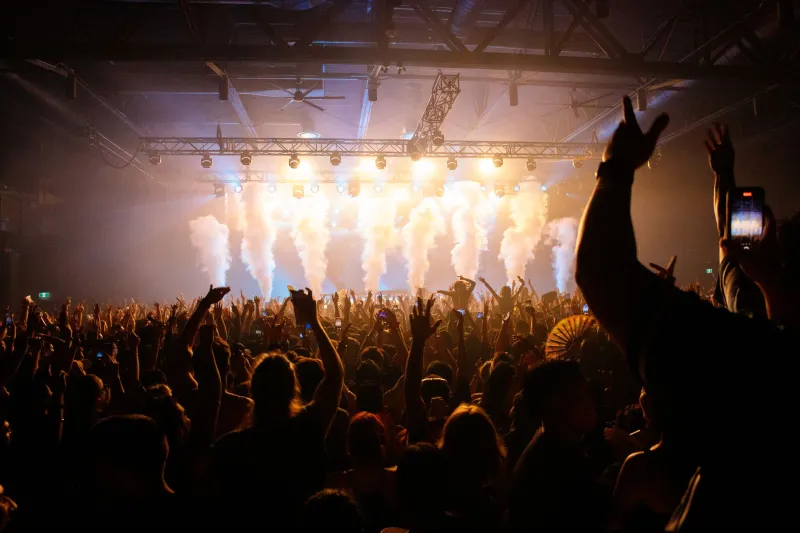
It's twenty minutes into a sold-out show at a venue in Leeds. The artist on stage — a respected singer-songwriter with three albums and a devoted following — has just finished a quiet, emotionally delicate song about her grandmother. The room is hushed. And then, from somewhere near the back bar, a voice: "Play something we know!"
The room holds its breath. The artist pauses. And then she grins.
"I'm fairly sure you know that one," she says. "Your mum played it at your christening."
The room erupts. The heckler laughs loudest of all. The gig, which was already good, becomes a story people will tell for years.
This is British heckling at its best. And understanding why that moment worked — why it landed rather than landed badly — requires understanding a social contract so specific to this island that it barely translates anywhere else.
A Very British Tradition
Heckling has roots deep in British public life. Political meetings, music hall performances, comedy clubs, folk nights — the idea that an audience has the right to make itself heard, to push back, to participate rather than passively receive, is baked into the culture in a way that genuinely baffles international performers playing UK venues for the first time.
A touring American comedian who's done several UK runs describes the adjustment as significant. "In the States, a heckle is almost always adversarial. Someone's trying to derail you, or they're drunk, or they want to be the show. Here it's more... conversational? Like the audience is reminding you they're there. That they're in this with you."
That distinction — adversarial versus participatory — is the key to understanding why British heckling, at its best, enhances rather than undermines a performance. The best British heckles aren't attacks. They're contributions. Clumsy, sometimes ill-timed contributions, but contributions nonetheless.
The Unwritten Rulebook
Of course, there is a rulebook. Nobody wrote it down, nobody enforces it formally, but anyone who's spent significant time at British gigs knows it exists. Break its rules and the room turns on you — not on the performer.
Rule one: timing is everything. A heckle thrown into a moment of genuine emotional weight — a grief-stricken lyric, a performer visibly moved — marks the heckler as someone who doesn't understand the room. The crowd will not forgive this. The performer probably will, because performers are professionals, but the other four hundred people in the venue will collectively decide you're an idiot.
Rule two: it should be funny, or at least aimed at being funny. A heckle that's just an aggressive demand — "play something good!" without the wit to back it up — lands differently to one that's got a bit of craft to it. British audiences are discerning about comedy even when they're not at a comedy gig.
Rule three: it's not about you. The moment a heckle becomes more about the person shouting than about the dynamic between performer and audience, it crosses a line. This is where the social contract breaks down, and where venue staff tend to get involved.
When It Goes Wrong
Ask anyone who works the floor at a live music venue and they'll have a story. Usually several.
One security manager at a mid-sized venue in Glasgow describes the spectrum from benign to genuinely unpleasant. "Most of the time it's fine — someone shouts something daft, the artist handles it, everyone moves on. But occasionally you get someone who's decided they're the entertainment. They'll keep going even after the room's turned against them. That's when it becomes a problem."
The gender dimension is worth naming directly. Female performers report a specific type of unwanted audience interaction that goes beyond heckling into something uglier — comments about appearance, unsolicited personal remarks, the kind of thing that has nothing to do with the performance and everything to do with making a woman feel uncomfortable on stage. This isn't heckling. It's harassment. And the distinction matters, even if the person doing it doesn't see one.
"There's a version of 'banter' that's cover for something less funny," one vocalist says plainly. "And most audiences are actually pretty good at spotting it. The room usually sorts it before I have to."
That's a significant point. One of the underappreciated dynamics of British gig culture is the degree to which the audience self-polices. A genuinely hostile heckle will often attract more displeasure from the surrounding crowd than from the performer — a collective "not here, mate" that's more effective than any intervention from the stage.
The Performer's Arsenal
For artists who've spent time on the UK circuit, handling a heckle is a skill as fundamental as tuning a guitar. The approach varies wildly by personality and genre, but certain principles hold across the board.
Ignoring a heckle is an option, but a risky one. It can read as flustered, or worse, humourless. Acknowledging it briefly and moving on is safer. But the real art — the thing that separates performers who own a room from those who merely occupy it — is the ability to use a heckle as fuel.
A well-handled heckle that becomes part of the show is worth more than a clean, uninterrupted set. It proves the performer is present, alive, genuinely in the room rather than running through a pre-packaged experience. British audiences, who are constitutionally suspicious of anything that feels too polished or pre-planned, respond to this viscerally.
"The best gig I ever played," one musician reflects, "had about four heckles in the first half hour. And every single one of them ended up being part of the show. I referenced them later in the set, the audience remembered them, it became this shared thing. You can't plan that. But you can be ready for it."
The Audience's Side
It would be a mistake to frame this purely from the performer's perspective. The heckle, at its best, is an expression of investment. You don't shout things at performers you don't care about. You sit politely and wait for it to end.
The heckle — the witty, well-timed, affectionate shout from the crowd — is a declaration of presence. It says: I'm here, I'm paying attention, and I feel comfortable enough in this room to make myself heard. That's not disruption. That's participation.
Britain's live performance culture, at its most alive, is a conversation. The stage talks, the room responds, the stage responds to the response. The heckle is just one part of that exchange — the most audible part, the one that gets remembered, the one that occasionally makes the night.
Get it right and you're part of the show. Get it wrong and you're the reason people are staring at their shoes.
The line between those two things is thinner than you'd think. But then, most interesting things are.