The Awkward Pause: Britain's Complicated, Slightly Absurd Relationship With the Encore
Let's just be honest about what's happening.
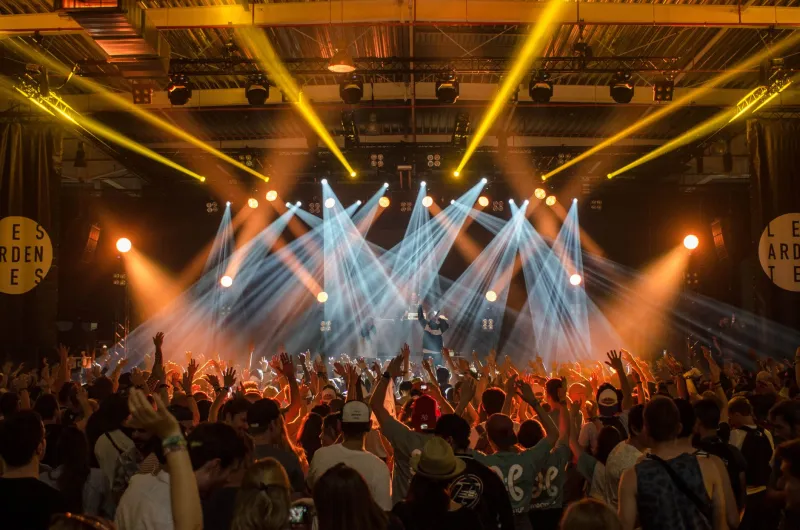
The band finishes their set. They bow, they wave, maybe one of them points at the crowd in that slightly awkward way that's become a cliché. They walk off stage. The house lights don't come up. The PA is playing nothing. And three hundred people start rhythmically clapping and chanting because everyone in the room — including, critically, the band who are standing in the wings with their tech towels and their water bottles — knows that in approximately ninety seconds, they'll be coming back.
This is the British encore. It is, objectively, a complete fiction. And yet it remains one of the most emotionally potent moments in live music.
A Theatre We All Agreed To Perform In
The encore as a convention has been around long enough that most people don't question it anymore. It emerged from a genuine tradition — audiences demanding more from performers who had genuinely finished — and over decades it calcified into a ritual that both sides understand is scripted while simultaneously pretending it isn't.
This creates a fascinating bit of collective theatre. The audience knows the band is coming back. The band knows the audience knows. Everyone is, in some sense, performing their role in a play that has no surprises. And yet — and this is the genuinely interesting bit — it still works. The clapping still builds. The moment the band walks back out still lands with a charge that a straightforward continuation of the set wouldn't produce.
Why? Because the fiction is doing real emotional work.
The gap — that strange, suspended minute or two of darkness and anticipation — functions as a kind of reset. It gives the audience a moment to process what they've just experienced, to want more before they get it, and to feel the satisfaction of having collectively summoned the band back. Even if everyone knows the summoning was inevitable, the act of doing it together creates a sense of communal agency that's genuinely pleasurable.
When the Fiction Breaks Down
The ritual only holds up when both sides honour it properly. And there are ways to get it catastrophically wrong.
The most common failure mode is the premature encore — walking off and coming straight back within thirty seconds, before the audience has had time to build any real momentum. It kills the tension instantly. The room hasn't had the chance to want you back yet. You've just... gone to the side of the stage and immediately returned. It feels less like a triumphant return and more like you forgot something.
The opposite problem is the overlong gap — standing in the wings for so long that the energy in the room starts to dissipate. There's a sweet spot, somewhere between sixty and ninety seconds in most UK venues, where the clapping has built to a satisfying peak and the room is genuinely ready. Leave it too long and you've let the air out of the balloon. The audience gets tired, slightly irritated, and the reappearance feels like a relief rather than an event.
"Timing the encore return is an actual skill," says one touring musician who's played the UK circuit extensively and asked not to be named for fear of sounding too cynical. "You're listening to the crowd from the wings. You can hear when they've peaked. That's when you go back."
The Encore That Earns It
Not all encores are created equal, and British audiences — who have a finely tuned instinct for authenticity — can tell the difference between an encore that's been earned and one that's just going through the motions.
An earned encore is one where the main set was genuinely complete — where the band left at a natural high point, where the room felt the ending as a real ending, and where the encore songs feel like a bonus rather than a continuation. The best encores tend to be structurally different from the main set: sometimes more intimate, sometimes more explosive, but always with a sense of being set apart.
Some of the most celebrated moments in British live music history have been encore moments specifically because of this separation. The audience has been through a full emotional arc, the band has stepped away, and then the reappearance carries all the weight of everything that came before it. The encore song lands differently because of the pause. It's the same principle as a rest in music — the silence gives the next note its meaning.
The Honest Encore
There's been a growing movement among some British artists — particularly in the indie and folk scenes — to simply not do the traditional encore at all. They play their full set, including the big finale, and then they're done. No walk-off, no clapping, no return.
The argument for this approach is straightforward: it's more honest. It respects the audience's intelligence. It treats the show as a complete thing rather than a game.
The argument against it is equally straightforward: it misses the point. The encore isn't really about honesty. It's about experience. It's about giving the audience a moment of collective want that gets satisfied. Stripping that out in the name of authenticity might actually be the less generous choice.
There's also something specifically British about this tension. We're a culture that's deeply suspicious of anything that feels too theatrical or manipulative, and simultaneously one that loves a good bit of theatre when it's done right. The encore sits right in the middle of that contradiction — obviously staged, genuinely felt, and somehow both at once.
The Last Song Is Never Really the Last Song
Maybe the most honest thing you can say about the British encore is that it's a way of acknowledging something true about live music: it's hard to end.
A gig isn't a film or a book. It doesn't have a definitive full stop. It's a shared experience between people in a room, and those don't end cleanly. The encore ritual is, in its own slightly absurd way, a formal acknowledgement of that — a way of marking the ending while also delaying it, of saying goodbye while staying just a little bit longer.
Which, when you think about it, is a very British thing to do.