Tape Doesn't Lie: Inside Britain's Underground Live Music Preservation Movement
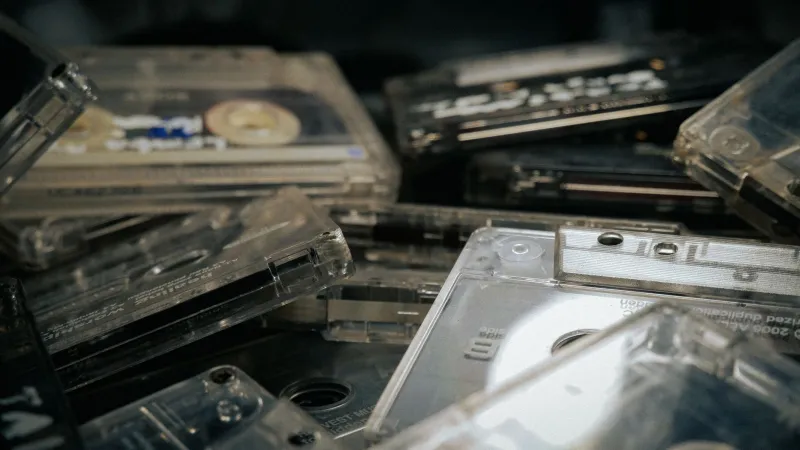
Tape Doesn't Lie: Inside Britain's Underground Live Music Preservation Movement
Somewhere in a semi-detached house in Coventry, there's a man with seventeen external hard drives. Each one is labelled with masking tape and a marker pen. Each one contains hundreds of hours of live music that the rest of the world has entirely forgotten about. He doesn't want his name published. He just wants the recordings to survive.
This is the quiet, slightly eccentric, occasionally legally murky world of the British live music archivist — and it's far bigger than most people realise.
The Recordings That Weren't Supposed to Exist
Bootlegging has a long and complicated history in British music culture. Long before smartphones made it trivially easy to capture a gig from your jacket pocket, dedicated tapers were smuggling reel-to-reel equipment into venues under overcoats, positioning microphones inside woolly hats, and spending the entire show standing very, very still. The results were often rough — muffled bass, crowd noise drowning the vocals, the occasional intrusive drunk — but they existed. And existence, for this community, is the whole point.
The modern archivist operates with considerably more sophisticated kit. Binaural microphones that sit inside the ears like hearing aids. Digital recorders capable of capturing audio at resolutions that rival professional studio equipment. Post-production software that can strip crowd noise, balance frequencies, and restore recordings that were originally made on a Nokia in 2003. The technology has genuinely transformed what's possible, and the results, at the better end of the spectrum, are remarkable.
But here's the thing — the recordings that these people are most desperate to preserve aren't the famous nights. They're not the sold-out Brixton Academy shows or the Glastonbury headline sets that someone official will eventually get around to releasing. They're the Tuesday night show at a venue in Sheffield that closed three years ago. They're the support act who never made it but absolutely should have. They're the unreleased songs that got dropped from setlists and never recorded properly. The stuff that, without someone pointing a recorder at the stage, would simply cease to exist.
Doing the Work the Labels Won't
The archivists themselves are pretty clear about their justification, and it's hard to argue with the logic. Major labels sit on vast vaults of live recordings — soundboard tapes, professionally filmed concerts, radio sessions — that they neither release nor make available to researchers. The commercial calculation simply doesn't add up for them. Meanwhile, the physical evidence of entire careers quietly degrades in storage.
Venues aren't much better. Most don't record their shows at all, and those that do rarely have any systematic approach to preserving what they capture. When a venue closes — and plenty have, particularly since 2020 — whatever institutional memory existed tends to scatter or disappear entirely.
So the archivists step into that gap. They build databases, cross-reference setlists with audience recordings, upload to platforms like the Internet Archive, and correspond with each other in forums that have the energy of academic journals crossed with very enthusiastic pub conversation. There are dedicated communities tracking the complete live history of specific artists across decades. There are regional archivists cataloguing the output of local scenes. There are people who have made it their personal mission to document every show that ever happened at a particular venue.
Is it legal? That's where it gets complicated.
The Ethics of the Obsessive
The legal position in the UK is genuinely murky. Recording a live performance without permission potentially infringes the performer's rights under the Copyright, Designs and Patents Act 1988. Distributing those recordings is an even grayer area. Most archivists draw a firm line at commercial distribution — they're not selling anything, they're preserving and sharing within communities that are, in their view, the most devoted fans an artist could hope for.
Some artists actively support the practice. There's a long tradition, particularly in folk and jazz circles, of performers tolerating or even encouraging audience taping, understanding that these recordings serve both as promotional material and as a kind of collective memory. Others are less comfortable with it, and their objections deserve to be taken seriously — these are their performances, their art, their sometimes imperfect nights on stage.
The archivists who are most thoughtful about this tend to operate with a quiet code of honour. They'll pull recordings if an artist asks. They won't distribute anything that the artist is clearly planning to release commercially. They prioritise documentation over distribution. And many of them have had conversations with musicians who, years later, were genuinely grateful that someone captured a show they themselves had no record of.
Why It Matters More Than You'd Think
There's a broader cultural argument here that goes beyond any individual recording. Live music is inherently ephemeral — that's part of what makes it powerful. But ephemeral doesn't have to mean lost. The way we understand British music history is already shaped by what happened to be captured and what wasn't. Whole scenes, whole periods, whole careers are underrepresented in the historical record simply because nobody pointed a recorder at the right stage on the right night.
The archivists are, in their slightly chaotic, obsessive way, doing genuine cultural work. The academic musicologists and official historians will eventually catch up to what these communities already know: that the unofficial record is often the most honest one.
Back in Coventry, the man with the seventeen hard drives is backing up his latest acquisition — a recording from a 1994 show at a long-demolished venue, transferred from a cassette tape that was found in a charity shop in Wolverhampton. The audio quality isn't great. But it's there. And for now, that's enough.