Eighty-Eight Keys, No Boundaries: The Remarkable British Life of the Piano
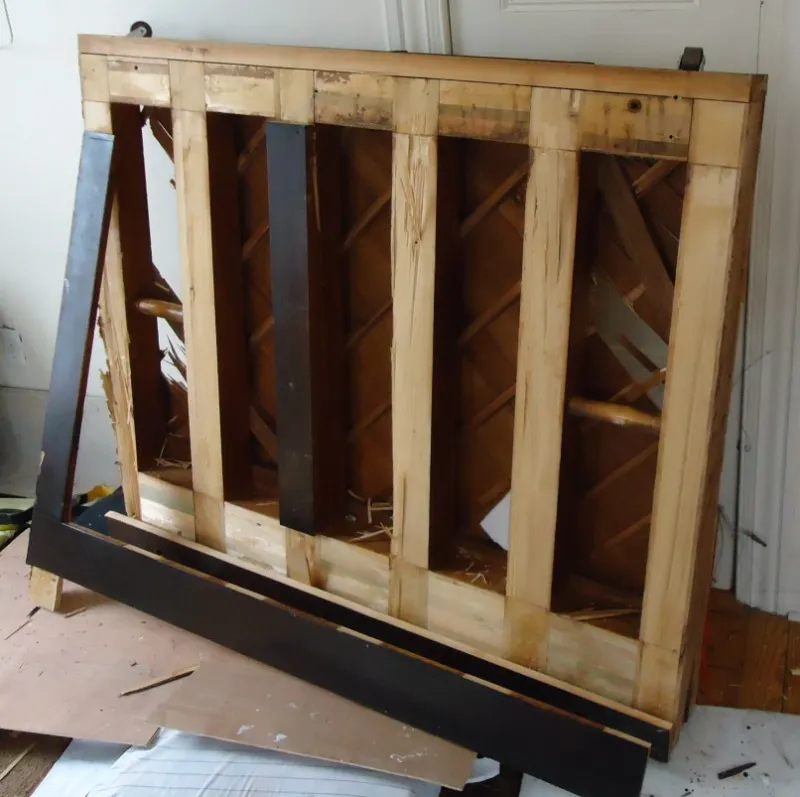
Photo: Tomwsulcer, CC0, via Wikimedia Commons
There's a piano in the back room of a pub in Leeds that hasn't been properly tuned since 2009. Three of the keys stick. The sustain pedal requires a specific technique — a firm press followed by a slight release — that regulars know instinctively and newcomers discover through trial and error. The landlord has been meaning to get it sorted for years. In the meantime, on Friday nights, it gets played.
This is not an unusual situation. Across Britain, in pubs and working men's clubs, in church halls and community centres, in the front rooms of terraced houses, there are pianos in various states of maintenance and neglect that are nevertheless, somehow, still making music. The piano is possibly the most resilient instrument in British cultural life — and certainly the most socially promiscuous.
The People's Instrument
There's a persistent myth that the piano is a posh instrument. It's understandable where this comes from — the concert grand is expensive, imposing, and strongly associated with formal classical training and the kind of recital halls that still feel vaguely intimidating to anyone who didn't grow up going to them. But the piano's actual history in Britain is considerably messier and more democratic than that image suggests.
The Victorian era put pianos into working-class homes on a mass scale. Hire purchase made them accessible to families who could never have bought one outright. Sheet music for popular songs was cheap and widely available. The ability to play — even badly, even by ear, even with no formal training whatsoever — became a genuine social currency in communities across the country. The pub piano, the parlour piano, the piano at the church social: these weren't aspirational objects. They were furniture, in the best sense of the word.
That democratic tradition never entirely went away. It just got less visible as other instruments took cultural centre stage — the guitar above all — and as the piano became associated with the grinding discipline of grade exams and classical lessons that many children experienced as punishment rather than pleasure.
Finding the Voice in the Wrong Room
Some of the most interesting piano stories in British music come from people who learned on instruments that had no business being played at all.
There's a particular quality to the experience of learning on a bad piano that musicians talk about with a strange affection. The instrument forces adaptation. If certain notes are missing or unreliable, you find ways around them. If the action is heavy, you develop touch. If the tuning is off, your ear adjusts to the instrument's own internal logic rather than an external standard. Several musicians have described this as inadvertently excellent preparation for playing in the real world, where nothing is ever quite ideal and the ability to make something work regardless is the most practical skill you can have.
The community hall upright. The school piano that the caretaker kept threatening to throw out. The one in the corner of the student union bar that was technically for the jazz society but was, in practice, available to anyone who sat down at it. These instruments have launched more British musical careers than any number of pristine Steinways.
Crossing the Class Line
What's genuinely remarkable about the piano in British culture is the way it has moved between social contexts that other instruments rarely manage to bridge. The same basic instrument — eighty-eight keys, strings and hammers — sits at the heart of classical recitals, jazz sessions, pub singalongs, gospel services, progressive rock concept albums, and contemporary pop productions. No other instrument operates across that range with such apparent ease.
This versatility is partly physical. The piano is a complete harmonic instrument — you can play melody and accompaniment simultaneously, which makes it unusually self-sufficient and unusually useful in any musical context. But it's also cultural. The piano carries different meanings in different rooms, and it seems to absorb the character of wherever it finds itself rather than imposing its own.
A grand piano in the Royal Festival Hall means one thing. The same instrument — well, not quite the same instrument — in a jazz club in Soho means something else entirely. The upright in the pub means something else again. And somehow, the music that emerges from all three contexts is recognisably piano music, shaped by the same fundamental mechanics, even when it sounds nothing like anything that would recognise the others as relatives.
 Photo: Royal Festival Hall, via cdn.londonandpartners.com
The Arena and the Boozer
Contemporary British pop and rock has seen a quiet piano renaissance over the past two decades. Artists who might once have defaulted to guitar as their primary instrument have found that the piano offers something different — a directness, an intimacy, a capacity for both grandeur and vulnerability that suits certain kinds of songwriting perfectly.
The arena show built around a piano is now a recognisable British format. The solo performer, the spotlight, the instrument that somehow makes a 15,000-capacity venue feel like a much more personal space. It's a trick that works because the piano carries those associations of the parlour and the pub — of music as something shared and immediate — even when it's amplified to fill a space the size of a small town.
Meanwhile, the pub piano in Leeds still gets played on Friday nights. The three sticky keys have become part of the music. The regulars have stopped noticing them. And occasionally, someone sits down who plays the thing so beautifully that the whole room goes quiet, which is perhaps the most essentially British musical moment there is — something extraordinary happening in completely ordinary circumstances, on an instrument that wasn't quite up to the job, and being remarkable anyway.