Rooted and Radical: How Ancient British Folk Customs Are Quietly Reshaping Modern Music
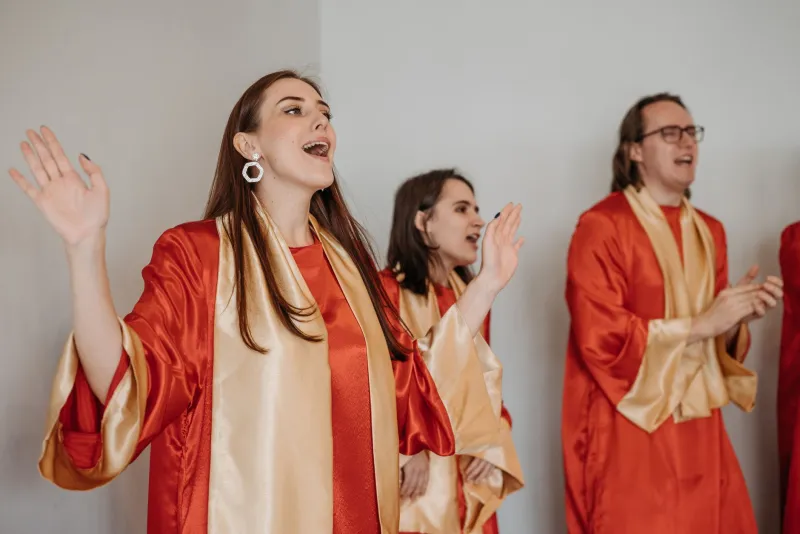
Somewhere in a Somerset orchard on a cold January evening, a group of musicians are banging pots, singing loudly at apple trees, and pouring cider on the roots. It's wassailing — a ritual with roots stretching back further than anyone can precisely date — and it looks, on the surface, like a charming bit of rural eccentricity. Look closer, though, and you'll find that some of the musicians involved are releasing records that sit comfortably alongside contemporary independent releases, playing festivals that book artists from across the genre spectrum, and building audiences who are hungry for exactly this kind of thing.
Britain's folk traditions are not museum pieces. They never really were. And a new wave of artists is making that point with genuine creative force.
What We Mean When We Say Folk
The word 'folk' carries a lot of baggage in British music culture. It conjures specific images — bearded men in pubs, acoustic guitars, a certain kind of earnest delivery that polite people describe as 'authentic' and less polite people describe as dull. That version of folk exists, and it has its audience, and there's nothing wrong with it.
But the folk traditions we're talking about here are older and stranger and considerably more interesting than any particular musical genre. They're the seasonal rituals — Plough Sunday in January, May Day celebrations, midsummer gatherings, harvest festivals, the entire dark and peculiar calendar of midwinter customs that Christianity absorbed but never quite tamed. They're the songs that were sung not as entertainment but as function — to mark time, to bind communities, to make sense of the agricultural year.
These aren't songs written by identifiable composers. They evolved, collectively, over generations. They belong to places and seasons rather than to individuals. And that communal, rooted quality is exactly what's attracting contemporary artists who are tired of making music for algorithms that have no concept of where or when they are.
The Algorithm Problem
To understand why ancient seasonal music is having a moment, you need to understand what streaming culture has done to the relationship between music and time.
Playlist culture is, almost by design, placeless and seasonless. The same playlist that serves you in July can serve you in December. Music is served to you based on what you've listened to before, what other people with similar listening histories enjoyed, what the platform has commercial reasons to promote. The connection between music and lived experience — between a song and the specific moment it was made for — gets systematically eroded.
For a generation of artists who grew up with this as the dominant music delivery system, there's something genuinely radical about making music that is explicitly tied to a season, a location, a community ritual. It refuses to be decontextualised. It insists on its own particularity. You can't really wassail in July. The harvest song means something different when you're actually at the end of the harvest. That specificity is a feature, not a limitation.
Artists Doing It Differently
Across Britain, musicians are finding creative ways to weave these traditional frameworks into contemporary practice without it feeling like fancy dress.
Some are doing it through commissioning — working with local communities to create new songs for old occasions, so that the wassail or the May Day celebration has a living, evolving musical tradition rather than a preserved one. The new song sits alongside the old song. Both are sung. The tradition continues to grow rather than being frozen.
Others are incorporating the structural elements of folk tradition — call and response, communal participation, the use of repetition as a tool for collective experience — into performances that have nothing overtly 'folk' about them. The aesthetic is contemporary; the architecture is ancient. Audiences often don't consciously register the influence, but they feel the difference. There's a quality of togetherness in music built on participatory structures that's hard to manufacture through other means.
Still others are going fully committed to the seasonal calendar, building their entire performance year around it — releasing music tied to specific times of year, performing at events that mark seasonal transitions, treating the agricultural and ceremonial calendar as a genuine creative framework rather than a nostalgic reference point.
Place as a Creative Force
One of the most interesting threads running through this revival is the renewed emphasis on place. Traditional folk music was always deeply local — the songs of Cornwall sound different from the songs of Northumberland, not just stylistically but in terms of what they're about, what landscapes and weathers and working conditions they describe.
Contemporary artists engaging with this tradition are often doing so with a conscious sense of their own locality. They're writing about specific hills, specific rivers, specific communities. They're performing in the places the songs describe. They're creating a feedback loop between art and landscape that commercial music-making rarely has the patience or the geographic rootedness to attempt.
This isn't parochialism. It's the opposite — it's the recognition that the most universal truths are often accessed through the most specific particulars. A song about one particular harvest in one particular field in one particular county can speak to something deeply human about time, labour, and belonging that a song about 'the countryside' in general simply cannot reach.
Why It Matters Now
There's a broader cultural conversation happening in Britain about belonging, identity, and what we actually share as communities in an increasingly fragmented social landscape. Folk traditions — the seasonal rituals, the communal songs, the ceremonies that mark time and bind neighbours — speak directly to that question.
They offer a model of cultural identity that isn't about exclusion or nostalgia but about participation. These traditions were always added to, always adapted, always absorbed new influences. They survived not by being preserved in amber but by being used, argued over, changed, and passed on.
The artists engaging with them now are doing exactly that. They're not recreating the past. They're using the past as raw material for something that belongs entirely to the present. And in doing so, they're making some of the most genuinely rooted, genuinely radical music in Britain today.