When the Music Stops: The Secret Psychology Behind Britain's Most Memorable Live Moments
When the Music Stops: The Secret Psychology Behind Britain's Most Memorable Live Moments
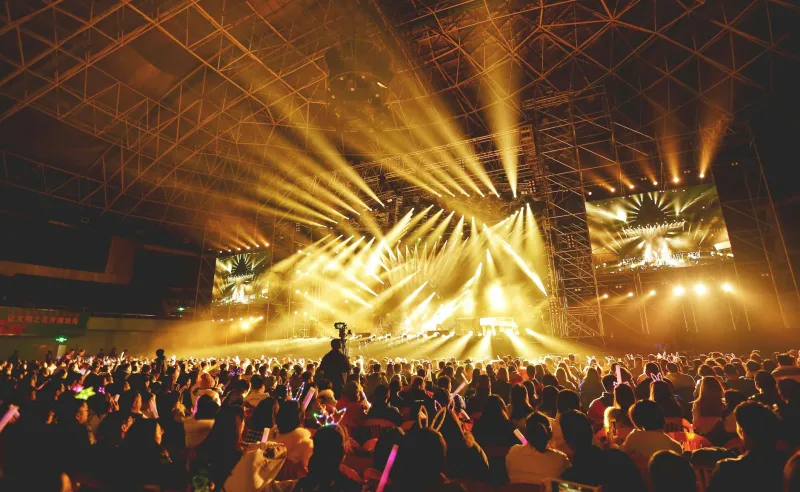
There's a moment in every great live performance where something shifts. The chattering dies down, phones get pocketed, and suddenly a room full of individuals becomes a single, breathing entity. It's that precise instant when a performer stops simply playing music and starts creating an experience that will linger in people's minds for years to come.
Across Britain's venues—from the sticky floors of Camden pubs to the grand stages of Manchester's Albert Hall—artists are discovering that the difference between a decent gig and an unforgettable one isn't just about the songs. It's about understanding the invisible threads that connect performer to audience, and knowing exactly when to pull them.
The Theatre of Anticipation
Sarah Chen, who's been running sound at Bristol's The Louisiana for eight years, has watched countless artists attempt to capture that elusive magic. "The ones who really get it understand that the show starts before they even pick up their instrument," she explains. "It's in how they walk on stage, how they adjust the microphone, even how they look at the crowd during that first pause."
This pre-performance choreography isn't accidental. Many of Britain's most compelling live acts have developed what could be called 'entrance rituals'—small, seemingly spontaneous moments that are actually carefully crafted to establish connection. A knowing glance at the front row, a muttered comment about the venue's acoustics, or even a deliberate fumble with equipment that makes the artist appear more human.
"I used to think authenticity meant being completely natural on stage," admits Marcus Webb, a folk singer who's built a devoted following across Yorkshire's smaller venues. "But I've learned that authenticity in performance is actually about choosing which parts of yourself to reveal, and when."
The Architecture of Intimacy
The British music scene's strength has always been its ability to create intimacy, even in larger spaces. This isn't just about venue size—though the UK's abundance of 200-capacity rooms certainly helps. It's about performers who understand how to make each person in the audience feel like they're part of something exclusive.
Jazz vocalist Elena Rodriguez, whose monthly residency at London's Ronnie Scott's regularly sells out, has perfected what she calls "the conspiracy of the moment." Between songs, she'll share seemingly impromptu observations about the evening—commenting on someone's laugh in the back row, or acknowledging a couple on their anniversary. These aren't random observations; they're strategic choices designed to make the entire room feel like they're witnessing something unrepeatable.
"People don't just want to hear your music," Rodriguez explains. "They want to feel like they're part of the story you're telling. Every night, I'm creating a narrative that includes them as characters, not just observers."
The Science of Silence
Perhaps counterintuitively, some of the most powerful moments in live performance happen when the music stops entirely. British audiences, with their particular appreciation for understatement and timing, respond strongly to performers who understand the weight of pause.
Drum and bass producer James "Frequency" Morrison discovered this during a technical failure at a Manchester warehouse gig. When his equipment cut out mid-track, instead of panicking, he let the silence hang for nearly ten seconds before slowly building the track back up using just his voice and the crowd's energy. "That ten seconds of nothing became the moment everyone talked about afterwards," he recalls. "It taught me that sometimes the most important thing you can do is stop."
This use of strategic silence has become a hallmark of Morrison's live sets. He'll deliberately create moments where the bass drops out, the samples fade, and the only sound is the collective breathing of hundreds of people waiting for what comes next.
The Encore Equation
The traditional encore—that ritualised dance where the artist leaves, the audience demands more, and everyone pretends it wasn't planned—might seem outdated in an era of calculated social media moments. But Britain's most memorable live performers have evolved this convention into something more sophisticated.
Indie rock band The Velvet Understudies, who've built a cult following across Scotland's festival circuit, have turned their encores into collaborative storytelling sessions. Rather than simply returning to play their biggest hit, they'll ask the audience to choose the narrative thread for an improvised song, creating a unique piece that exists only in that moment, with that specific crowd.
"We realised that people weren't just clapping for more music," explains lead vocalist Danny MacLeod. "They were asking us to extend the experience, to make the evening feel complete. So we started treating encores as the final chapter of a story we'd been writing together all night."
The Memory Makers
Ultimately, the performers who create lasting memories understand that they're not just entertainers—they're memory architects. They know that people won't remember every song, but they will remember how the evening made them feel, and they'll carry specific moments with them long after the venue lights come up.
The most successful approach seems to combine meticulous preparation with genuine spontaneity. These artists rehearse not just their songs, but their between-song patter, their stage movements, even their responses to common audience reactions. Yet they remain flexible enough to abandon their plans when a genuinely magical moment presents itself.
"The best nights are when everything you've prepared meets something you never could have planned," reflects Webb. "That's when you know you've created something that will stick with people. That's when you've turned a gig into a memory."
In a world where recorded music is infinitely accessible and perfectly produced, live performance remains the one experience that can't be replicated or streamed. Britain's most compelling artists understand this, and they're using that knowledge to create moments that exist nowhere else—moments that remind us why, despite everything, we still need to gather in rooms and share music together.