The Sacred Hour: What Britain's Best Performers Do When Nobody's Watching
The Sacred Hour: What Britain's Best Performers Do When Nobody's Watching
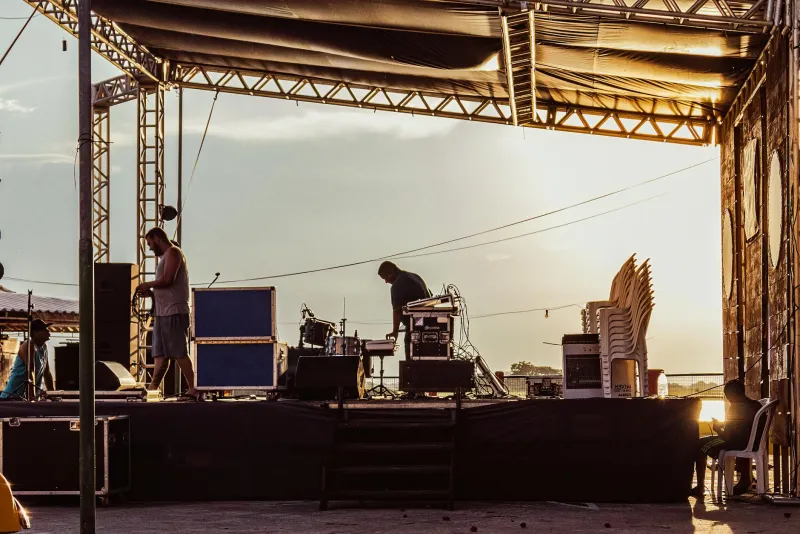
The venue is still half-empty, roadies are running final checks on the PA, and there's that particular smell of anticipation mixed with stale beer that defines British music venues. But backstage, in cramped dressing rooms and makeshift spaces, something crucial is happening. The hour before showtime isn't just waiting – it's transformation.
The Ritual Begins
"People think the show starts when we walk on stage," says Marcus Webb, guitarist for Sheffield indie outfit The Midnight Echoes. "But for me, it starts exactly ninety minutes before. That's when I disappear."
Webb's routine is methodical: thirty minutes of scales, twenty minutes of meditation, then complete isolation until showtime. It sounds excessive until you watch him perform – there's a presence there, a complete inhabiting of the music that doesn't happen by accident.
This isn't about superstition, though plenty of that exists too. (One prominent British drummer we spoke to insists on eating exactly three digestive biscuits before every show – "It's about consistency," she explains with complete seriousness.) The hour before showtime is where the technical meets the spiritual, where preparation transforms into readiness.
The Technical Ballet
For sound engineer Sarah Chen, who's worked with everyone from Arctic Monkeys to lesser-known pub circuit regulars, the pre-show hour is pure choreography. "You've got to understand – every venue is different. The acoustics in a Victorian theatre in Bath are nothing like a converted warehouse in Manchester. That hour is when you make the room work for the artist."
 Photo: Arctic Monkeys, via arcticmonkeys.com
The best performers understand this intimately. They arrive early, walk the stage, test sight lines, feel the room's energy. It's not glamorous work – it's problem-solving dressed up as rock and roll. But watch a seasoned performer navigate a dodgy monitor mix or adapt to unexpected acoustic challenges, and you're seeing the fruit of hundreds of these unglamorous hours.
"I've seen brilliant musicians fall apart because they didn't respect the preparation," Chen continues. "And I've seen average players deliver career-defining performances because they understood that the show doesn't start with the first song – it starts with the first decision you make about how to approach the evening."
Mind Games and Mental Preparation
The psychological aspect is perhaps the most fascinating. Dr. Emma Hartwell, a sports psychologist who's worked with several high-profile British musicians, explains it in terms familiar to athletes: "That hour before performance is when you transition from your everyday self into your performing self. It's a controlled dissociation, really."
Singer-songwriter Tom Bradley, whose intimate acoustic performances have built a devoted following across the UK's smaller venues, describes his process: "I spend the first half-hour just sitting with the songs. Not practising them – I know them backwards. But remembering why I wrote them, what they mean, how they want to be sung tonight, in this room, to these people."
It's this attention to the specific that separates good performers from great ones. The same song performed in a 200-capacity venue in Liverpool demands different emotional preparation than it would in a festival field in Somerset. The hour before showtime is when that calibration happens.
The Collective Ritual
For bands, this hour becomes a shared sacred space. The Velvet Storms, a Manchester-based four-piece, have developed what they call "the circle" – fifteen minutes of complete silence, standing together, just breathing. "It sounds mad when you describe it," admits bassist Jenny Morrison, "but it aligns us. By the time we break the circle, we're not four separate musicians anymore – we're one instrument."
This collective preparation often extends to the crew. The best British touring acts treat their sound engineers, lighting technicians, and stage managers as part of the creative process. The hour before showtime becomes a moment when everyone involved synchronises their intentions.
"You can feel it when a whole production is properly prepared," observes venue manager Pete Collins, who's overseen thousands of shows across London's mid-tier circuit. "There's this calm intensity. Even when things go wrong – and they always do – the whole team responds like a single organism."
The Paradox of Spontaneity
Perhaps the most counterintuitive aspect of pre-show preparation is how it enables spontaneity. The more thoroughly prepared a performer is, the more freedom they have to respond to the unexpected.
"I prepare obsessively so I can forget everything and just be present," explains folk singer Kate Morrison, whose solo performances are renowned for their intimate intensity. "If I'm worried about whether my guitar's in tune or whether I remember the words to the bridge, I can't connect with the audience. The preparation frees me to be completely in the moment."
This paradox – that rigid preparation enables fluid performance – is perhaps the secret that separates Britain's most compelling live acts from those who merely go through the motions. The hour before showtime isn't about perfecting a routine; it's about creating the conditions for magic to happen.
The Invisible Investment
What's remarkable about this crucial hour is how invisible it remains to audiences. We see the performance, the apparent effortlessness, the moments of genuine connection between artist and crowd. We rarely consider the unglamorous work that makes those moments possible.
"The audience should never see the preparation," notes veteran performer David Mills, whose career has spanned four decades of British venues. "If we've done our job properly, they believe what they're witnessing is completely spontaneous. That's the greatest compliment we can receive – when our preparation becomes invisible."
In an age of social media documentation and behind-the-scenes content, this hour remains largely private. It's too internal, too personal, too specific to translate into shareable moments. And perhaps that's as it should be – some aspects of the creative process need to remain sacred, protected from the scrutiny that can diminish their power.
The next time you're watching a performer who seems to inhabit their music completely, remember: what you're witnessing isn't just talent. It's the culmination of countless hours of invisible preparation, of rituals refined over years, of the sacred space where good performers transform into great ones. The show may start when the lights go up, but the real magic begins in that crucial hour when nobody's watching.