The Invisible Orchestra: How British Crowds Become Part of the Show
The Art of Collective Creation
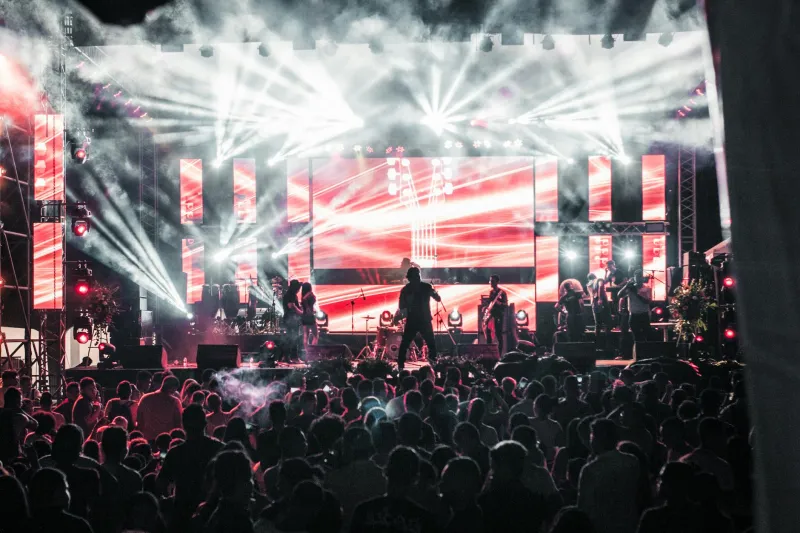
There's something magical that happens when the lights dim in a British venue. It's not just the anticipation crackling through the air—it's the subtle shift that occurs when hundreds of strangers become temporary collaborators in something bigger than themselves. Walk into any gig across the UK, from a sweaty basement in Birmingham to the hallowed halls of the Royal Albert Hall, and you'll witness one of music's most underrated phenomena: the audience as artist.
British crowds don't simply consume live music; they actively participate in its creation. This isn't just about the obvious moments—the stadium-sized choruses or the festival sing-alongs that make your spine tingle. It's about the micro-interactions, the breathing spaces, the collective decisions that happen in real-time between performer and crowd that genuinely alter the trajectory of a performance.
Regional Rhythms
Travel the length of Britain and you'll discover that each region brings its own flavour to the live music experience. Glasgow audiences are legendary for their warmth, creating an atmosphere so welcoming that even the most nervous performer feels like they're playing in their mate's front room. Head down to Manchester, and you'll encounter crowds that treat every gig like a communal celebration—they're not just watching the show, they're hosting it.
London presents a different beast entirely. The capital's audiences can be discerning to the point of intimidation, but when they're won over, their energy is transformative. There's a particular breed of London crowd that creates pockets of intense focus, turning intimate venues into cathedrals of concentration where every note matters.
Meanwhile, in Bristol's underground scene, audiences approach live music with an almost academic appreciation, creating spaces where experimental sounds can flourish. The crowd becomes a safety net for artistic risk-taking, their openness giving performers permission to push boundaries.
The Silent Conversation
What fascinates performers time and again is the silent conversation that develops during a live show. It's the moment when an artist realises the crowd is ready for something they hadn't planned—an extended guitar solo, an unexpected cover, or that vulnerable song they usually save for the encore. British audiences have mastered the art of non-verbal communication with performers.
This dialogue manifests differently depending on the setting. In intimate venues, it might be the collective lean-in during a quiet passage, creating a bubble of shared attention that allows delicate moments to breathe. In larger spaces, it's the way a crowd can sense when to join in and when to hold back, creating dynamic peaks and valleys that no amount of rehearsal could achieve.
The Democracy of the Dance Floor
Perhaps nowhere is the collaborative nature of British live music more evident than on the dance floor. Watch any crowd during a particularly infectious groove and you'll see democracy in action. There's no choreographer, no director—just hundreds of individual decisions that somehow coalesce into a collective movement that feeds back to the performers on stage.
This phenomenon extends beyond dance music. Folk audiences create their own traditions around specific songs, indie crowds develop regional variations on familiar chants, and metal audiences turn pit etiquette into an art form. Each subculture within British music has evolved its own language of participation.
Seasonal Shifts and Festival Magic
The festival circuit reveals another dimension of British audience participation. Summer crowds bring a different energy—looser, more experimental, willing to discover new artists and sounds. There's something about outdoor stages and temporary communities that transforms both performers and audiences into more adventurous versions of themselves.
Winter gigs, by contrast, create intimacy through necessity. When audiences have battled through rain and cold to reach a venue, there's an investment in the experience that translates into deeper engagement. These are the gigs where performers often report feeling most connected to their audience.
The Ripple Effect
What's remarkable is how this audience participation creates ripple effects that extend far beyond the individual performance. Artists frequently cite specific crowd reactions as inspiration for new songs, career directions, or creative collaborations. The feedback loop between British audiences and performers has shaped decades of musical evolution.
Consider how many legendary live albums were recorded in British venues, not just for their acoustics, but for their crowds. The energy captured on these recordings often comes not from the performance alone, but from the unique alchemy that occurs when British audiences become active participants in the musical moment.
Beyond the Applause
The true measure of British audience contribution isn't found in the volume of applause or the enthusiasm of the cheering—though both certainly matter. It's in the subtle ways crowds shape the emotional arc of performances, providing the resistance and release that turns good gigs into transcendent experiences.
Next time you're at a live show, pay attention to the invisible orchestra surrounding you. Notice how the collective breathing creates space for quiet moments, how the shared anticipation builds tension before a drop, and how the communal release transforms individual enjoyment into something approaching the spiritual.
British audiences aren't just witnesses to live music—they're co-conspirators in its creation. Every gig is a collaboration between stage and floor, and the magic happens in the spaces between.