Close Encounters: The Magnetic Pull of Britain's Intimate Music Scene
When Less Becomes More
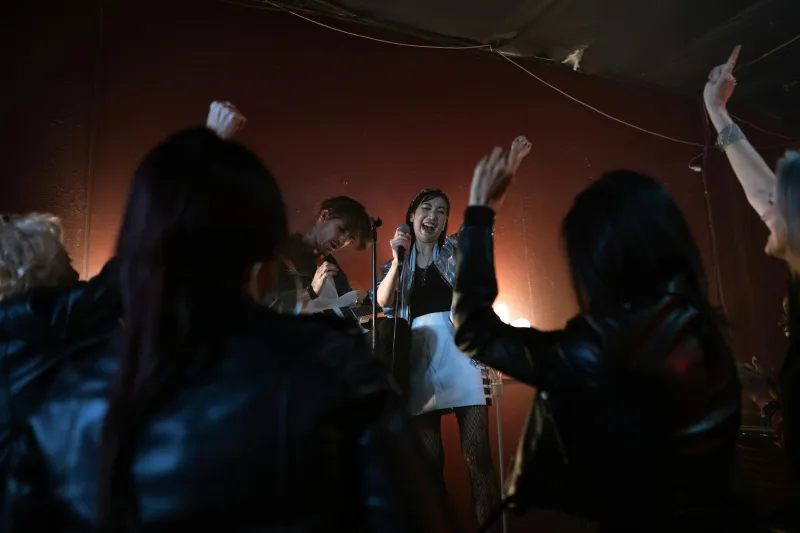
There's something almost magical that happens when you can see the whites of a performer's eyes. When their voice carries across a room of maybe fifty people, unfiltered by massive sound systems and arena acoustics. When you're close enough to notice their nervous hand tremor before they launch into their most vulnerable song.
Britain is experiencing a quiet revolution in live music, and it's happening in the smallest spaces you can imagine.
Whilst Taylor Swift sells out Wembley Stadium and Ed Sheeran packs football grounds, a growing number of music fans are deliberately seeking out the opposite experience. They're hunting down gigs in church halls, above-pub function rooms, converted warehouses, and intimate club spaces where the capacity rarely exceeds a few hundred.
And the artists? They're discovering that these smaller stages might just be where their true power lies.
The Intimacy Factor
Step into The Deaf Institute in Manchester on any given evening, squeeze into the upstairs room at The Borderline in London, or find yourself in the cosy confines of Sneaky Pete's in Edinburgh, and you'll understand immediately why these venues are experiencing a renaissance.
The connection between performer and audience becomes electric when there's nowhere to hide. Every facial expression, every slight change in vocal tone, every moment of genuine emotion – it all becomes amplified in these intimate settings. The audience isn't just watching a performance; they're witnessing something deeply personal.
For artists, this proximity demands authenticity. You can't phone it in when someone's standing three feet away from you. The performance becomes less about spectacle and more about genuine human connection. Stories between songs aren't shouted into a void – they're shared like conversations with friends.
Rediscovering the Art of Listening
In our age of constant distraction, intimate venues offer something increasingly rare: the opportunity to truly listen. Without massive screens, pyrotechnics, or elaborate staging, the focus returns to what matters most – the music itself.
Audiences at these smaller gigs behave differently too. Mobile phones stay in pockets longer. Conversations quiet down when the music starts. There's an unspoken respect for the shared experience that seems to evaporate in larger venues where anonymity breeds inconsideration.
The acoustic properties of smaller spaces also play a crucial role. A singer's voice in a 100-capacity room has warmth and presence that gets lost in cavernous arenas. The subtle dynamics of a performance – the gentle brush of fingers against guitar strings, the intake of breath before a high note – become part of the experience rather than casualties of distance and amplification.
The Storytelling Renaissance
Intimate venues have sparked a renaissance in musical storytelling. Artists are rediscovering the power of narrative between songs, sharing the inspiration behind their work, the personal struggles that shaped their lyrics, or simply the amusing anecdotes from their journey.
This conversational approach creates a completely different dynamic. The artist becomes less of a distant idol and more of a relatable human being sharing their craft. Audiences leave these gigs feeling like they've discovered not just new music, but a new friend.
Some performers have embraced this so completely that their intimate shows bear little resemblance to their festival or arena performances. They strip away the production, slow down the pacing, and create space for vulnerability that simply isn't possible on larger stages.
Britain's Hidden Venue Treasures
Across the UK, venues that might have been overlooked a decade ago are becoming essential stops for both emerging and established artists. The Lexington in London's King's Cross serves incredible fried chicken alongside world-class indie acts. Glasgow's King Tut's Wah Wah Hut continues to be the launchpad for Scottish talent whilst maintaining its legendary intimate atmosphere.
In smaller cities and towns, converted spaces are breathing new life into local music scenes. Old churches become concert halls with natural reverb that money can't buy. Abandoned warehouses transform into atmospheric venues where the industrial setting adds character to every performance.
These venues often operate on passion rather than profit. The owners and staff genuinely care about music and creating experiences that matter. This ethos filters through to everything – from the care taken with sound quality to the way artists are treated, creating an environment where creativity can flourish.
The Economics of Connection
Interestingly, many artists are discovering that intimate venues can be more financially rewarding than larger spaces. Higher ticket prices are justified by the exclusive experience, and audiences are often more willing to purchase merchandise when they've had a personal encounter with the artist.
The economics work for venues too. Lower overheads, reduced staffing requirements, and the ability to create premium experiences mean that smaller capacity doesn't necessarily mean smaller profits. Many venue owners report that their intimate shows often sell out faster and generate more revenue per square foot than larger events.
The Post-Pandemic Effect
The COVID-19 pandemic accelerated this trend towards intimacy in unexpected ways. When large gatherings were impossible, musicians and audiences discovered the power of smaller, more personal experiences. Virtual concerts, whilst not the same as live performance, demonstrated that connection could transcend physical space.
As restrictions lifted, both artists and audiences seemed reluctant to return to the impersonal nature of massive venues. The appetite for authentic, human-scale experiences had been whetted, and intimate venues were perfectly positioned to satisfy this craving.
Where Careers Are Born
Historically, Britain's smallest venues have been the birthplace of its biggest stars. The Beatles at The Cavern Club, Oasis at small Manchester venues, Arctic Monkeys in Sheffield pubs – the pattern repeats across generations.
Today's intimate venue circuit continues this tradition, serving as both proving ground and creative laboratory for emerging talent. Artists can experiment with new material, hone their stagecraft, and build the kind of devoted fanbase that becomes the foundation for larger success.
The Future of Live Music
As streaming services make recorded music increasingly disposable, live performance becomes more valuable. But perhaps the future isn't about bigger spectacles – maybe it's about smaller, more meaningful encounters between artists and audiences.
Intimate venues offer something that no amount of technology or production budget can replicate: genuine human connection through music. In a world that often feels increasingly disconnected, these small spaces become sanctuaries where the ancient power of live music can work its magic.
The revolution isn't being televised or livestreamed – it's happening in rooms where you have to turn up, put your phone away, and simply be present for something beautiful.