Hidden Stages: The Unlikely Spaces Where Britain's Next Generation of Artists Find Their Voice
The Revolution Hiding in Plain Sight
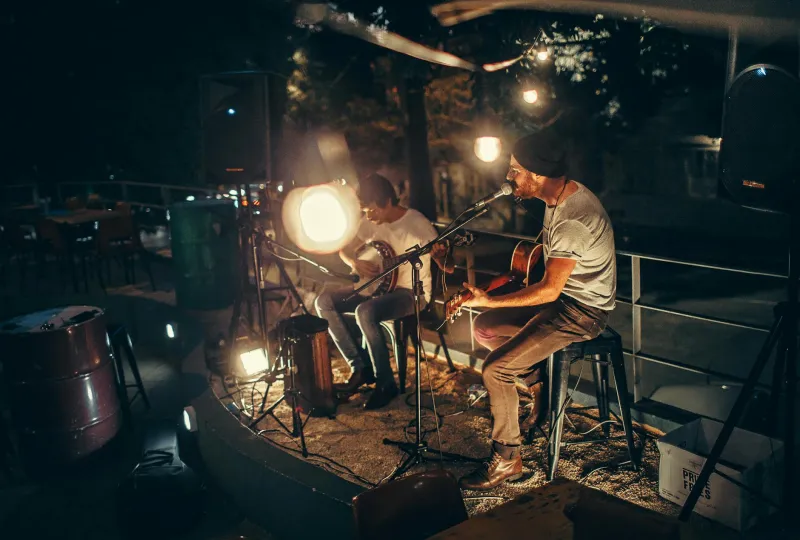
Whilst the nation's major venues grab headlines, a quieter revolution is unfolding in Britain's most unexpected corners. From the narrow aisles of independent bookshops to the converted cargo holds of canal barges, unconventional performance spaces are becoming the secret weapon in launching artistic careers.
These aren't your typical grassroots venues—they're spaces that were never meant for performance, yet have become breeding grounds for Britain's most authentic voices. The intimacy they offer creates something magical: genuine human connection in an increasingly digital world.
Where Art Meets Everyday Life
Take Sarah Chen, a folk singer from Manchester, whose breakthrough moment came not at a celebrated music hall but in the back room of a Hebden Bridge bookshop. "There were maybe fifteen people there, sitting cross-legged between the poetry shelves," she recalls. "But every single person was listening—properly listening. You could hear a pin drop between songs."
This intimacy is precisely what's drawing both performers and audiences to these unconventional spaces. Village halls that double as performance venues on weekends, rooftop gardens hosting acoustic sessions under the stars, even laundrettes that transform into comedy clubs after closing time—these spaces strip away the barriers between artist and audience.
The Canal Boat Circuit
Perhaps nowhere is this trend more evident than along Britain's waterways. Canal boats converted into floating venues are creating an entirely new circuit for emerging artists. The Floating Theatre Company, operating out of a restored narrowboat on the Thames, has seen dozens of performers credit their intimate 20-seat shows as career-defining moments.
"There's something about performing on water," explains venue coordinator Mark Phillips. "The gentle movement, the closeness to the audience, the fact that everyone's slightly outside their comfort zone—it creates this incredible energy. Artists tell us they feel more vulnerable and more powerful at the same time."
Beyond Traditional Boundaries
These venues aren't just offering stage time—they're redefining what performance can be. In a converted railway arch beneath London Bridge, experimental musicians are creating immersive sound experiences that simply wouldn't work in traditional venues. The natural acoustics of the Victorian brickwork have become part of the performance itself.
Meanwhile, in Scotland's Highlands, a former telephone box has been transformed into the world's smallest concert hall. Artists perform solo sets to audiences of one, creating intensely personal musical experiences that have garnered international attention on social media.
The Economics of Intimacy
What makes these venues particularly attractive to emerging artists is their accessibility. Unlike traditional venues with complex booking processes and high hire fees, many of these spaces operate on profit-share models or nominal fees. A community centre in Tottenham charges £20 for an evening slot, whilst a converted garage in Brighton operates on a "pay what you can" basis for both artists and audiences.
This economic model is democratising performance opportunities. Artists who might never afford traditional venue hire are finding platforms for their work, whilst audiences are discovering new talent at prices that won't break the bank.
Building Authentic Communities
What emerges from conversations with both performers and venue operators is a sense of community that traditional circuits often struggle to achieve. Regular attendees become familiar faces, artists return to favourite venues, and genuine relationships form.
"It's not just about the performance," notes comedian James Wright, who honed his craft in the upstairs room of a Cornish pub. "The audience stays for a drink afterwards. You get proper feedback, make connections, sometimes even find your next gig through someone who was there."
The Digital Amplification Effect
Interestingly, these intimate venues are finding new life through social media. Their unique settings create highly shareable content—a performance in a medieval church ruins or atop a London car park naturally generates engagement that generic venue shots cannot match.
This digital amplification is extending the reach of these intimate performances far beyond their physical capacity, creating buzz that often leads to larger opportunities.
The Future of Alternative Performance
As Britain's cultural landscape continues to evolve, these unconventional venues are proving that bigger isn't always better. They're creating space for authentic artistic expression whilst building genuine communities around live performance.
For emerging artists, the message is clear: your big break might not come from the venue you expect. Sometimes the most transformative moments happen in the most unlikely places—you just need to be brave enough to seek them out.