Ghost Notes: How Legendary Gigs Echo Through Britain's Music DNA
The Ripple That Never Ends
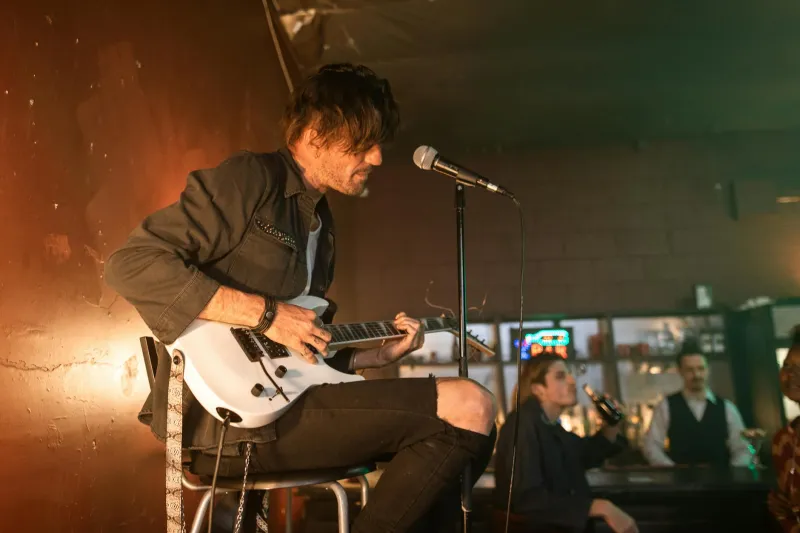
Walk into any proper British boozer with a music history, and you'll hear them – the stories that refuse to die. "You should've been here in '97 when that band played upstairs," the barman will tell you, eyes gleaming with the kind of reverence usually reserved for football legends or proper Sunday roasts. These aren't just nostalgic ramblings; they're the ghost notes of Britain's live music scene, performances so potent they've woven themselves into the fabric of local culture.
The phenomenon isn't limited to legendary venues like The Cavern Club or The Marquee. In fact, some of the most enduring performance folklore emerges from the most unlikely spaces – a community centre in Stockport, a record shop basement in Brighton, or a church hall in Glasgow. What transforms these ordinary moments into extraordinary memories isn't necessarily the size of the crowd or the fame of the artist, but something far more elusive: the perfect storm of timing, emotion, and collective experience.
When Walls Remember
Venue owner Sarah Mitchell has witnessed this transformation firsthand at The Joiners Arms in Southampton. "There's this invisible archive in every room where live music happens," she explains. "The walls don't just absorb sound; they absorb moments. Some gigs just stick to the plaster somehow."
Mitchell points to a particular evening in 2019 when a relatively unknown indie band from Manchester played to fewer than fifty people. "Nothing special on paper," she recalls. "But something magical happened that night. The acoustics were perfect, the crowd was completely locked in, and the band just... transcended. People still talk about it. They bring friends just to stand in the same spot where it happened."
This phenomenon extends beyond individual venues. Entire neighbourhoods can become defined by a single performance. Take Camden's legendary punk heritage or Manchester's Haçienda-era identity – these aren't just historical footnotes but living, breathing influences that continue shaping new generations of artists and audiences.
The Alchemy of Unforgettable
What separates the forgettable from the folkloric? According to Dr. Emma Richardson, a cultural anthropologist at Leeds University who studies live music communities, it's rarely about technical perfection. "The gigs that become legendary often have an element of chaos, vulnerability, or spontaneity," she notes. "They're moments when the fourth wall between performer and audience completely dissolves."
Musician Jamie Torres, whose 2018 acoustic set at a tiny Edinburgh venue has achieved near-mythical status among local music fans, agrees. "I was having the worst day of my life when I walked on stage," he admits. "My girlfriend had just dumped me, I'd lost my day job, and I was considering packing it all in. I had nothing left to lose, so I just... opened up completely. Played songs I'd never performed before, told stories I'd never shared. The room went dead silent, then erupted. I knew something special had happened."
That performance, captured on a shaky phone video that's been shared thousands of times, continues to draw pilgrims to the venue. More importantly, it spawned a weekly acoustic night that's become a cornerstone of Edinburgh's emerging artist scene.
Digital Ghosts and Modern Mythology
Social media has fundamentally altered how performance folklore spreads and survives. A single TikTok clip or Instagram story can transform a local legend into national mythology overnight. Yet paradoxically, this democratisation of documentation hasn't diminished the power of the live experience – if anything, it's amplified it.
"The digital breadcrumbs actually enhance the mystery," observes music journalist and longtime scene chronicler Pete Williams. "You might see a thirty-second clip of an incredible moment, but you had to be there to understand the full context, the energy, the collective intake of breath when something transcendent happened."
This creates a new kind of cultural currency. Being present at these defining moments becomes a badge of honour, a way of establishing credibility within music communities. The stories get embellished, the details become more vivid with each retelling, but the emotional truth remains intact.
The Ripple Effect
Perhaps most significantly, these ghost notes don't just live in memory – they actively shape the future. Venues program differently after hosting a legendary night. Artists push themselves harder, knowing they might be one performance away from creating something timeless. Audiences attend with heightened expectations and openness to transcendence.
"Every gig has the potential to become folklore," Mitchell observes. "That's what keeps this whole ecosystem alive. Not the guaranteed hits or the big names, but the possibility that tonight, in this room, something magical might happen that people will still be talking about in twenty years."
In Britain's live music landscape, these ghost notes serve as both inspiration and aspiration. They remind us why we keep showing up, keep believing in the transformative power of shared musical experiences. Long after the final chord rings out and the last punter heads home, the best performances continue their work – shaping scenes, inspiring artists, and proving that sometimes the most powerful music is the kind that plays on in our collective memory, forever.