Behind Closed Doors: The Secret World That Shapes Britain's Stage Performers
The Hidden Theatre
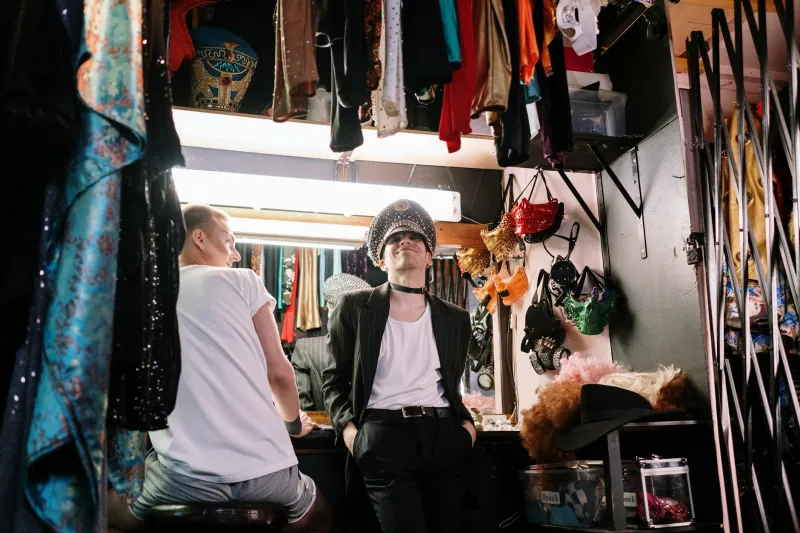
Walk past any venue in Britain at half-past seven on a Friday night, and you'll witness the same ritual playing out behind every stage door. While punters queue for pints and check their phones, something altogether more intimate is unfolding just metres away. In windowless rooms barely bigger than broom cupboards, performers are engaging in the ancient alchemy of transformation – not just putting on costumes, but stepping into entirely different versions of themselves.
This backstage world operates by its own unspoken rules. Here, vulnerability isn't weakness but currency. Raw nerves are shared like cigarettes, and the pre-show ritual becomes as sacred as the performance itself. For Britain's independent artists, these hidden spaces serve as both confessional booth and laboratory, where creative risks are tested long before they reach the audience.
Corridor Conversations and Creative Chemistry
Talk to any seasoned performer about their formative experiences, and they'll rarely mention the applause. Instead, they'll describe a conversation in a draughty corridor between acts, or the advice whispered by a sound technician during a particularly rough soundcheck. These chance encounters, occurring in the liminal spaces of Britain's cultural landscape, often prove more influential than any formal training.
Sarah Chen, a singer-songwriter who's spent the last five years working her way up from open mic nights in Manchester to supporting slots at the Roundhouse, puts it perfectly: "The real education happens when you're sharing a mirror with someone who's been doing this for twenty years. They'll tell you things no music college ever would – like how to breathe when your chest feels tight, or why you should never apologise to an audience for a mistake they probably didn't even notice."
These informal mentoring relationships, born from proximity rather than programme, create a uniquely British approach to artistic development. Unlike the more structured systems found elsewhere, our backstage culture thrives on serendipity and genuine human connection.
The Democracy of Nerves
Britain's backstage spaces possess an egalitarian quality that's distinctly our own. Whether you're headlining the O2 or playing your first gig at a pub in Peckham, pre-show anxiety affects everyone equally. This shared vulnerability creates unexpected alliances and learning opportunities that transcend the usual industry hierarchies.
Jamie Morrison, who manages several grassroots venues across the North West, has observed this phenomenon countless times: "I've seen established acts giving pep talks to complete newcomers, sharing everything from vocal warm-ups to stage presence tips. There's something about those final minutes before showtime that strips away all the industry politics. Everyone's just trying to do their best work."
This culture of mutual support extends beyond individual performances. Many of Britain's most successful independent artists trace their breakthrough moments not to a particular gig, but to a piece of advice received in a cramped dressing room or a connection made whilst queuing for the single backstage toilet.
Regional Flavours and Local Wisdom
The character of backstage culture varies dramatically across Britain's diverse venue landscape. The green rooms of Edinburgh's Fringe venues buzz with a different energy than the converted storage spaces behind Camden's music pubs. Yorkshire's working men's clubs maintain traditions that stretch back generations, whilst London's pop-up venues create their own spontaneous rituals.
Each regional scene contributes its own flavour to this hidden ecosystem. Northern venues often emphasise practicality and straight-talking advice, whilst Scottish spaces tend toward philosophical discussions about art's purpose. The West Country's festival circuit has developed its own mobile backstage culture, where caravans and converted buses become temporary creative sanctuaries.
These regional differences aren't just charming quirks – they actively shape the artists who emerge from each scene. A performer who's learned their craft in Glasgow's intimate venues will approach their art differently than someone raised on London's more commercial circuit.
The Sanctuary Principle
For many performers, backstage areas serve as essential decompression chambers where the public persona can be temporarily set aside. This breathing space proves crucial for artistic longevity, providing a buffer between the intensity of performance and the demands of everyday life.
"People don't realise how exhausting it is to be 'on' all the time," explains Marcus Webb, a comedian who's worked every type of venue from Edinburgh basements to West End theatres. "Those few minutes in the wings or that quiet corner backstage – that's where you remember who you actually are beneath all the performance anxiety and adrenaline."
This sanctuary function becomes particularly important for artists dealing with the unique pressures of Britain's intimate venue culture, where the boundary between performer and audience often blurs completely.
The Future Behind the Curtain
As Britain's cultural landscape continues to evolve, so too does its backstage culture. Younger artists are bringing new rituals and support systems to these hidden spaces, whilst established performers adapt their pre-show routines to changing times.
What remains constant is the fundamental human need for connection and preparation that these spaces provide. In an industry increasingly dominated by digital interactions and remote collaboration, Britain's backstage culture offers something irreplaceably valuable: genuine human contact at the moment when it matters most.
The next time you're watching a performance, spare a thought for the invisible world that made it possible. Behind every confident entrance and polished delivery lies a network of whispered encouragements, shared anxieties, and quiet moments of preparation that transform ordinary people into the extraordinary performers we think we know.