Frequency and Feeling: How Britain's Independent Radio DJs Became the Artists' Best Allies
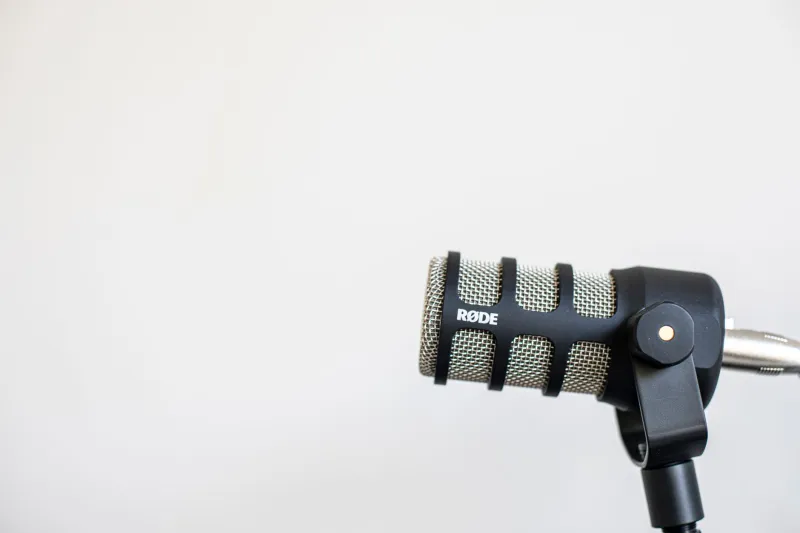
Somewhere in a repurposed community centre in Coventry, a DJ is playing a song you've never heard. It's not on any playlist. It hasn't been pitched by a PR company. The artist sent it directly, probably via an email that started with "I know this is a long shot, but..." and the DJ played it because it was good and that, in the end, was enough of a reason.
This is happening all over Britain. In converted garages and back bedrooms, in community arts spaces and digital-only studios broadcasting to audiences that range from a few hundred to a few thousand. Independent and community radio in the UK is not, by most conventional measures, a powerful industry. But by the measures that matter most to artists trying to build something real, it might be the most powerful thing going.
What Mainstream Radio Got Wrong
The relationship between British radio and emerging music has been complicated for a while. BBC Radio 1 introduced its playlisting system partly to manage the volume of releases, and the commercial stations followed their own version of the same logic. The result, over time, was a system that rewards familiarity — artists who already have streaming numbers, labels that already have relationships, sounds that already exist in a recognisable form.
That's not a conspiracy. It's just how risk-averse institutions behave. But it leaves an enormous gap, and the artists who fall into it are often exactly the ones worth paying attention to.
Independent radio didn't set out to fill that gap strategically. It just didn't have the same pressures. Without advertisers demanding demographic guarantees or executives worrying about quarterly reach figures, a community station DJ can play something because it moved them. That sounds obvious, but in the context of contemporary radio programming, it's genuinely radical.
The Personal Relationship Changes Everything
Ask artists who've been championed by independent radio presenters what made the difference, and the word you hear most often isn't "reach" or "audience" — it's "relationship."
Mainstream radio, for most emerging artists, is a one-way door. You submit through the correct channels, you wait, and if you're lucky you get a play without ever speaking to anyone. Independent radio works differently. The DJ often knows the artist, or at least knows their previous work. They'll follow up. They'll play the next track. They'll mention the gig that's coming up because they genuinely want people to go.
A singer from the West Midlands described getting a message from an independent station presenter the morning after a first play: "He'd listened to the whole EP and wanted to know if I'd come in for a session. Not a pre-recorded drop-in, an actual session. We talked for an hour about the songs. That conversation changed how I talked about my own music."
That kind of engagement is simply not what mainstream radio offers. It can't — the scale doesn't allow it. But for an artist at the early stages of figuring out who they are and what they're making, it can be formative in ways that an algorithmic playlist never will be.
The Streaming Problem Nobody Wants to Say Out Loud
Streaming platforms have made music more accessible than at any point in history, and that's genuinely worth celebrating. But the discovery mechanisms that were supposed to democratise the industry have developed their own orthodoxies.
Algorithms optimise for engagement. Engagement, in streaming terms, means completion rates, skip rates, playlist additions. Music that's interesting but slightly unusual tends to underperform these metrics not because listeners dislike it, but because it requires more of them than the algorithm typically rewards.
The result is a kind of sonic narrowing — not total, not uniform, but present. Tracks get smoother, intros get shorter, dynamics get compressed because the data says that's what keeps people listening. Independent radio, which doesn't have a skip button in the same way, operates outside that feedback loop entirely.
A DJ who loves a song will play it regardless of whether it has a hook in the first eight seconds. That freedom produces different outcomes — and sometimes it produces the kind of devoted listener who sought out an artist's back catalogue after a single radio play, which no algorithm has yet managed to replicate.
Community as the Real Metric
There's a geography to independent radio that streaming will never have. A station in Cardiff builds an audience in Cardiff. When it champions a local artist, that support has a physical dimension — people who heard the song on the radio might turn up to the gig, might tell someone at work, might buy something from the merch table.
For artists building a regional fanbase before they attempt anything national, that hyperlocal amplification is disproportionately valuable. A few hundred genuinely invested listeners in a specific city is more useful, at a certain stage, than tens of thousands of passive streams from anonymous listeners scattered across the country.
The Music Venue Trust and various artist development organisations have started to recognise this. The conversation around discovery is slowly shifting from pure streaming metrics towards the idea of community — actual communities of listeners who feel a sense of ownership over the artists they follow. Independent radio, almost by accident, has been building exactly those communities for years.
The DJs Who Are Doing It Right
It would be easy to romanticise all of this without acknowledging that independent radio is wildly inconsistent. Not every community station has a passionate champion with good ears and a genuine commitment to new music. Some are passion projects that never quite found their footing. The landscape is patchy.
But the ones that work, work brilliantly. Stations with presenters who treat their shows as genuine curatorial acts — who think about sequencing, context, the relationship between one track and the next — are producing something that feels genuinely valuable in ways that playlists rarely do.
They're also, not coincidentally, producing the kind of DJs that artists trust. And trust, in the music industry, is not nothing. It's actually quite hard to come by.
Signal Worth Seeking
Britain's independent radio ecosystem isn't going to replace streaming. Nothing is. But it's filling a specific, important gap — the gap between an artist finishing a record and an audience knowing that artist exists.
In that gap, the algorithm is imperfect. The mainstream playlist is largely closed. But somewhere, a DJ who genuinely loves music is doing a three-hour show for a few hundred people, and they're going to play your song because it's good.
That's not nothing. For a lot of British artists right now, it's everything.